01 Baby Gates & Stair Safety Guide
Baby gate for stairs with only one wall: what the open side needs before any gate will hold
Half the staircases in America have a wall on one side and something else on the other. The gate is the easy part; the something else decides everything.
- By
- Mike M.
- Updated
- Method
- How we choose
We earn a commission if you buy through our links, at no extra cost to you. It never decides the ranking: the method is published. Affiliate disclosure
What is on the other side?
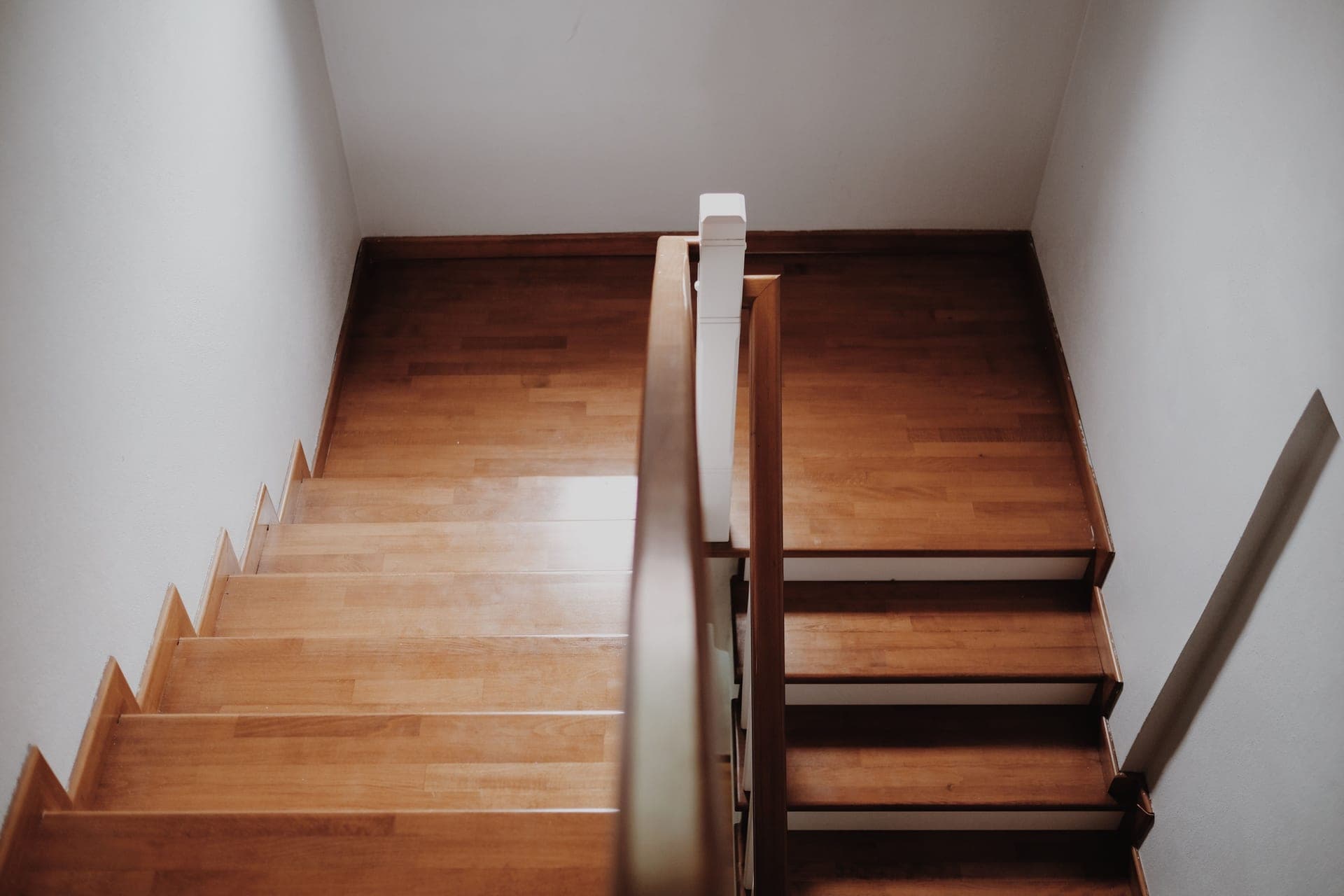
Stand at the top of the stairs and look at the side that is not a wall. It is one of four things, and each is a different install. Whatever it is, the top-of-stairs rule from the federal gate standard still applies: hardware-mounted only, no bottom bar, no pressure gate. That rule is the whole of pressure-mounted vs hardware-mounted baby gates, and the gates that meet it are in best baby gates for stairs.
A newel post
The easy version. The post is solid wood and vertical, so the gate's latch side attaches to it through a banister kit or an adapter, and the post never gets a hole. The Ingenuity Stairway+ includes a kit for square and round posts; the Perma adapter straps to any post and gives any hardware gate a flat face to screw into. Measure from the wall to the post at latch height, add the adapter's width if you are using one, and buy a gate whose range covers it. The full walkthrough is baby gates for banisters.
A half-wall or knee wall
A half-wall is a short framed wall, usually with a wood cap, that runs along the open side of the stairs. It is a wall, so a hardware gate mounts to it, with two conditions. First, the gate's brackets need to hit the wall's framing or its solid cap, not just the drywall face; a stud finder or a test hole in the cap tells you where. Second, the gate has to be at least as tall as the half-wall is useful: if the half-wall is 30 inches and the gate is 30 inches, a toddler on the landing can still reach the cap and climb. Choose a gate that stands taller than the half-wall or accept that the cap needs its own barrier.
Nothing at all
Some landings open onto the stairs with a wall on one side and empty air on the other, the railing starting a step or two down. There is nothing to attach a gate to, and no gate product fixes that. The fix is a mounting post: a 2x4 or a finished post anchored to the floor and the wall, or to the floor and a ceiling joist, that becomes the gate's second side. That is a small carpentry job, an hour for someone who does it, and it is the difference between a gate that holds and a gate that falls down the stairs with the child. If you would not do it yourself, this is exactly the case for a certified childproofer; the IAFCS keeps a directory. Once the post exists, the install is standard, in how to install a baby gate.
The picks
How we chose
Units we claim to have tested: 0
Everyone in this category says they tested it. We didn't, and we say so. Every pick is scored from the brand's published specs, width and size charts, warranty terms and cited research, against the problem this page is about. The sources are listed at the bottom of the page.
Scores are editorial judgments from that published data, not lab results. Nobody pays for placement, and a missing spec is scored neutral, never guessed. The full rubric is on How We Choose.
- Standards & certification
- 30%
- Installation truth
- 30%
- Toddler resistance
- 20%
- Adult one-hand use
- 5%
- Damage & reversibility
- 5%
- Value
- 10%
The weights this page used for its scores.
FAQ
Questions people ask
Can I use a pressure gate if there is only one wall?
What if the railing starts a step down from the landing?
Can a gate mount to a half-wall?
Keep going
Related guides and picks
Update log
What changed
- First published.
Receipts
Sources
- 01CPSC: Business guidance for gates and enclosures, 16 CFR part 1239 / ASTM F1004 (accessed Sep 21, 2026)
- 02Federal Register, Nov 14, 2022: Safety Standard for Expansion Gates and Expandable Enclosures (ASTM F1004-22, wall-cup warning label) (accessed Sep 21, 2026)
- 03International Association for Child Safety (IAFCS): find a certified professional childproofer (accessed Sep 21, 2026)
We don't lab-test gates, locks or anchors, and we don't pretend to. Specs, standards statements and install requirements come from the manufacturer's own pages and manuals (or a named retailer's listing where the brand doesn't publish them); injury data and standards come from the CPSC, ASTM, NEC via ESFI and the AAP, linked above. Prices are set by Amazon and change often, so we don't print them. Where a figure isn't published, we say so. Read the full method.