06 Babyproofing by Room & Stage Guide
Babyproofing for a crawling baby: get on the floor and see what they see
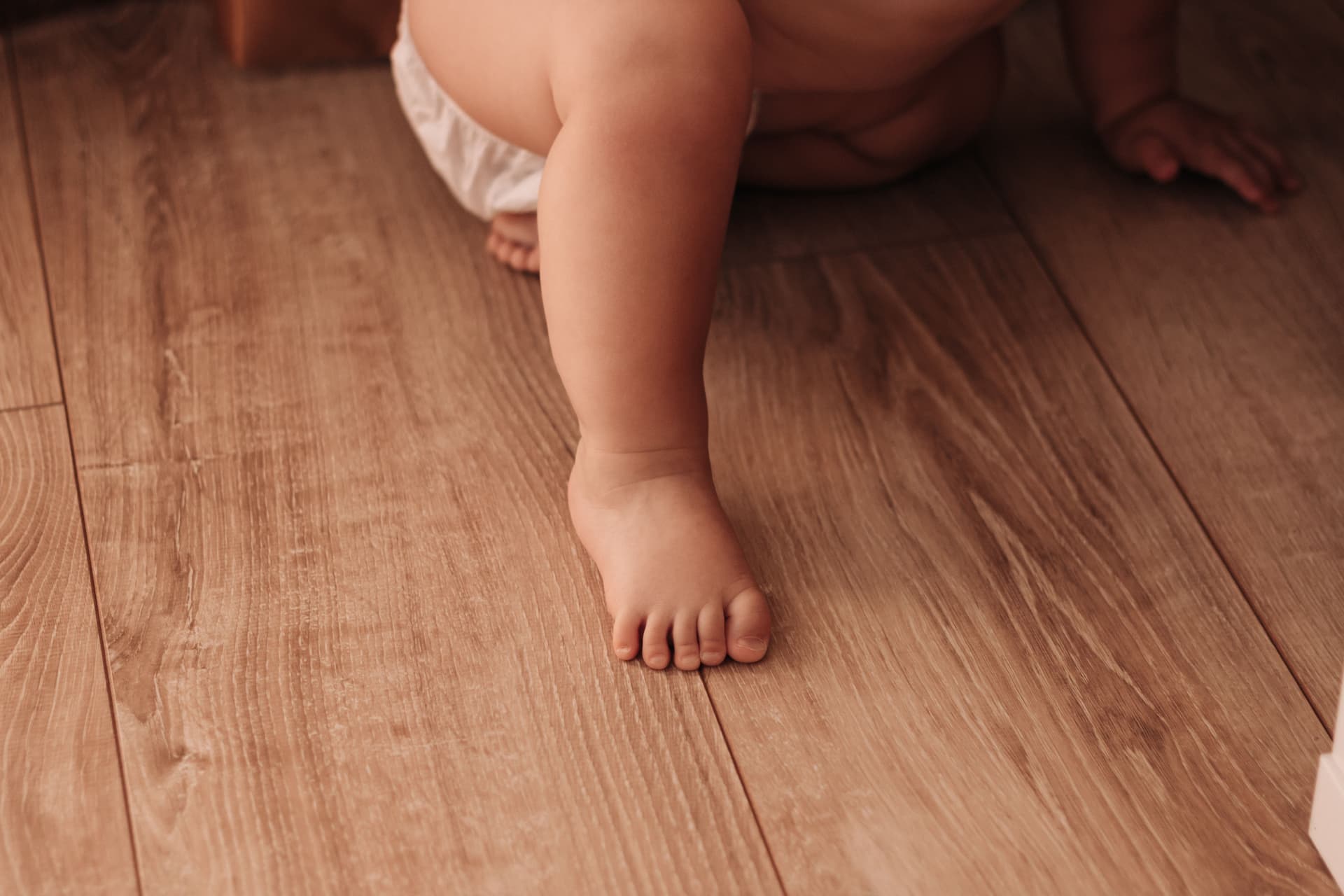
Crawling is the stage that changes the house. Everything under 30 inches is now reachable, and the fastest way to find it is on your hands and knees.
- By
- Mike M.
- Updated
- Method
- How we choose
We earn a commission if you buy through our links, at no extra cost to you. It never decides the ranking: the method is published. Affiliate disclosure
The knee-height walk
A crawler's world is everything from the floor to about 30 inches, and it is a different room from the one you see standing up. So walk it their way: on your knees, one room at a time, looking for the six things below. Take the phone and photograph each hazard as you find it, then work the list. The AAP's advice for poisons applies to everything at this height: out of reach, out of sight, locked up if possible. The stage before this, for a baby who rolls and sits, is babyproofing at 6 months; the whole timeline is when to start babyproofing.
1. The stairs
The first thing a crawler finds is the staircase, going up, which is fun, and then coming down, which is not. Hardware gate at the top, always; a pressure gate with its wall cups screwed in is acceptable at the bottom. Regalo prints “never use at top of stairs” on its pressure gates for a reason. The ranking is best baby gates for stairs; the doorway gates for the rooms you want to close off are in best pressure-mounted baby gates.
2. Cabinets and the trash
Under the sink first, because Poison Control's 2024 data puts household cleaners at the top of exposures in children under six. Then the drawer with the knives, the bathroom vanity with the medicine, the trash can, and the cabinet with the glassware. Magnetic locks hide inside; straps handle the trash and the appliances. Best cabinet locks for babyproofing ranks them; babyproofing the kitchen walks the room.
3. Outlets and cords
Outlets are at exactly a crawler's eye level. Check for the TR mark; cover or replace the outlets without it; box the ones with a lamp plugged in; get the power strip into a box and off the floor. Cords along the floor are for pulling and chewing; shorten and route them. Start at are outlet covers necessary and finish with how to babyproof cords.
4. Small objects and the dog bowl
Anything that fits through a toilet-paper tube can be choked on: coins, buttons, batteries, dog kibble, the caps of pens, a sibling's toy parts. The knee-height walk finds them under the sofa and behind the TV stand. Button batteries and magnets are the two that need a call to poison control if swallowed, so the remote with a coin cell goes high. The dog's water bowl is a drowning hazard for a crawler and its food bowl a choking one; feed the dog behind a gate. No product replaces the walk here.
5. Corners and the furniture they will pull up on
A crawler falls forward from all fours onto whatever is at forehead height: coffee table corners, the hearth, the edge of the TV stand. Foam corners on wood and stone, clear on glass, per best corner guards. And in a few weeks the crawler will pull up on the dresser, the bookcase and the TV stand; if they are not anchored yet, that is the job for tonight, per best furniture anchors. The living room, where most of this lives, is walked in babyproofing the living room.
The picks
How we chose
Units we claim to have tested: 0
Everyone in this category says they tested it. We didn't, and we say so. Every pick is scored from the brand's published specs, width and size charts, warranty terms and cited research, against the problem this page is about. The sources are listed at the bottom of the page.
Scores are editorial judgments from that published data, not lab results. Nobody pays for placement, and a missing spec is scored neutral, never guessed. The full rubric is on How We Choose.
- Standards & certification
- 25%
- Installation truth
- 20%
- Toddler resistance
- 20%
- Adult one-hand use
- 10%
- Damage & reversibility
- 10%
- Value
- 15%
The weights this page used for its scores.
FAQ
Questions people ask
How do I babyproof my house for a crawling baby?
What do crawling babies get into?
What age do babies start crawling?
Keep going
Related guides and picks
Update log
What changed
- First published.
Receipts
Sources
- 01American Academy of Pediatrics, HealthyChildren.org: Childproofing Your Home for Poisons (accessed Sep 21, 2026)
- 02Poison Control (poison.org): National poisoning statistics, 2024 data (accessed Sep 21, 2026)
- 03CPSC news release, Feb 8, 2024: TV and furniture tip-over fatalities and injuries (accessed Sep 21, 2026)
- 04Children's Hospital Colorado: Home baby proofing room by room (accessed Sep 21, 2026)
We don't lab-test gates, locks or anchors, and we don't pretend to. Specs, standards statements and install requirements come from the manufacturer's own pages and manuals (or a named retailer's listing where the brand doesn't publish them); injury data and standards come from the CPSC, ASTM, NEC via ESFI and the AAP, linked above. Prices are set by Amazon and change often, so we don't print them. Where a figure isn't published, we say so. Read the full method.