04 Outlet Covers, Cords & Blinds Guide
How to babyproof cords: the pull, the chew, the trip and the one that strangles
A cord is four hazards: it pulls a lamp onto a head, it goes in a mouth, it trips an adult carrying a baby, and, if it is a blind cord, it loops. Each gets a different fix.
- By
- Mike M.
- Updated
- Method
- How we choose
We earn a commission if you buy through our links, at no extra cost to you. It never decides the ranking: the method is published. Affiliate disclosure
Four hazards, four fixes
The pull. A cord over the edge of a table is a handle attached to a lamp, a kettle or a monitor. Fix: shorten, route, anchor. The chew. A cord is a teething ring with 120 volts in it if the insulation gives. Fix: get it off the floor and out of reach. The trip. A cord across a walkway drops an adult carrying a baby. Fix: raceways and routing. The loop. A blind cord forms a noose at a toddler's head height. Fix: cordless coverings. The outlet end of all of this is in best outlet covers for plugs in use.
The pull: shorten, route, anchor
Most cords are three times longer than the distance they cover. Coil the excess and secure it with a reusable tie at the appliance end, not the outlet end, so there is no slack loop on the floor. Route the working length behind furniture, along the baseboard, or through an adhesive raceway (a plastic channel that sticks to the wall; any hardware store sells them by the yard). Where a cord has to cross open floor, it should not; move the lamp. The things at the top of the cord get the same treatment as furniture: a floor lamp that can be pulled over gets a heavy base or goes away, and a TV gets strapped, per how to anchor a TV. The CPSC's no-anchor advice for TVs ends with the same instruction: keep cords out of reach.
The power strip
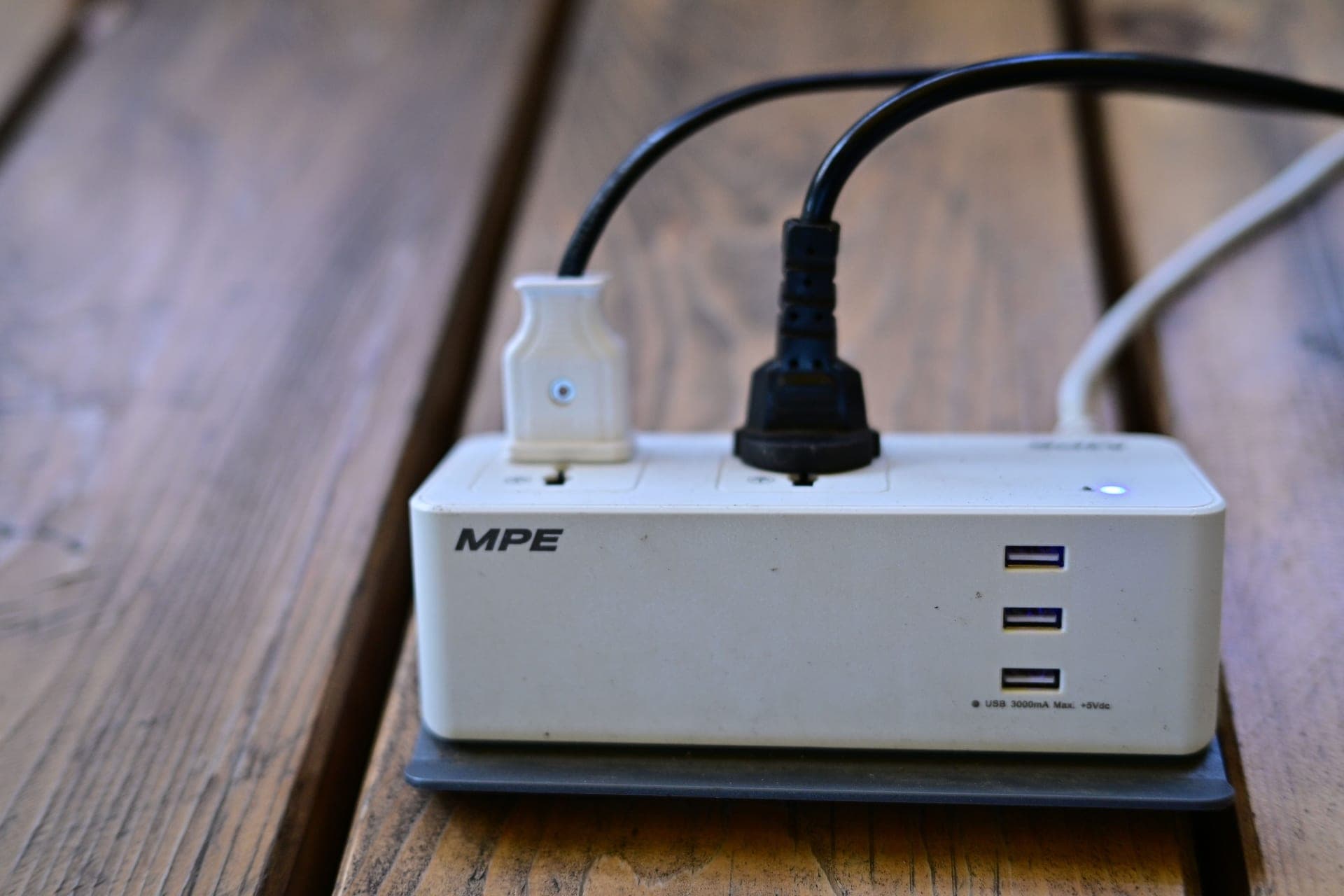
A power strip on the floor behind the TV is a row of live outlets with six cords coming out of it, at exactly crawling height, and no plug insert fixes it because every socket is in use. The fix is a box: Wappa's is 13.3 inches long, holds a standard six-outlet strip up to 11 inches, and closes with a double lock, with the cords exiting through side ports. Measure your strip; the ones with big adapters or USB blocks often run longer. Then mount the box on the back of the stand or a shelf rather than leaving it on the floor, which gets the cords off the floor too.
Plugs in use
A plug half-pulled from a wall outlet exposes live blades, and a tamper-resistant outlet's shutters do nothing while a plug is in. The in-use box screws over the outlet and locks a lid around the plug; the slim LectraLock does the same behind a sofa where a box will not open. Both are breaker-off installs and both are ranked, with the power-strip box, in best outlet covers for plugs in use. Whether the outlet itself needs anything more is in are outlet covers necessary.
Blind cords are a different hazard
Everything above is about electricity and pulling. Blind cords are about strangulation, and the CPSC treats them as one of the most serious hidden hazards in the home: about nine children under five die every year from window-covering cords, and in 2022 the CPSC made non-compliant cords on custom window coverings a substantial product hazard and adopted a federal standard. The CPSC's advice is cordless coverings. Until you can replace the blinds, wind-ups spool the cord up out of reach, and cribs and beds move away from windows. The full treatment is blind cord safety.
The picks
How we chose
Units we claim to have tested: 0
Everyone in this category says they tested it. We didn't, and we say so. Every pick is scored from the brand's published specs, width and size charts, warranty terms and cited research, against the problem this page is about. The sources are listed at the bottom of the page.
Scores are editorial judgments from that published data, not lab results. Nobody pays for placement, and a missing spec is scored neutral, never guessed. The full rubric is on How We Choose.
- Standards & certification
- 20%
- Installation truth
- 15%
- Toddler resistance
- 25%
- Adult one-hand use
- 15%
- Damage & reversibility
- 5%
- Value
- 20%
The weights this page used for its scores.
FAQ
Questions people ask
How do you hide electrical cords from a baby?
How do you babyproof a power strip?
Are blind cords really that dangerous?
Keep going
Related guides and picks
Update log
What changed
- First published.
Receipts
Sources
- 01CPSC news release, 2023: new federal safety standard for custom window covering cords (accessed Sep 21, 2026)
- 02CPSC news release, Feb 8, 2024: TV and furniture tip-over fatalities and injuries (accessed Sep 21, 2026)
- 03ESFI: Tamper Resistant Receptacles (TRRs) program page, NEC 406.12 (accessed Sep 21, 2026)
- 04CPSC publication: Childproofing Your Home, 12 Safety Devices to Protect Your Children (accessed Sep 21, 2026)
We don't lab-test gates, locks or anchors, and we don't pretend to. Specs, standards statements and install requirements come from the manufacturer's own pages and manuals (or a named retailer's listing where the brand doesn't publish them); injury data and standards come from the CPSC, ASTM, NEC via ESFI and the AAP, linked above. Prices are set by Amazon and change often, so we don't print them. Where a figure isn't published, we say so. Read the full method.