05 Windows, Doors, Fireplace & Edges Guide
Blind cord safety: the loop at head height, the federal rule, and the fix that costs nothing today
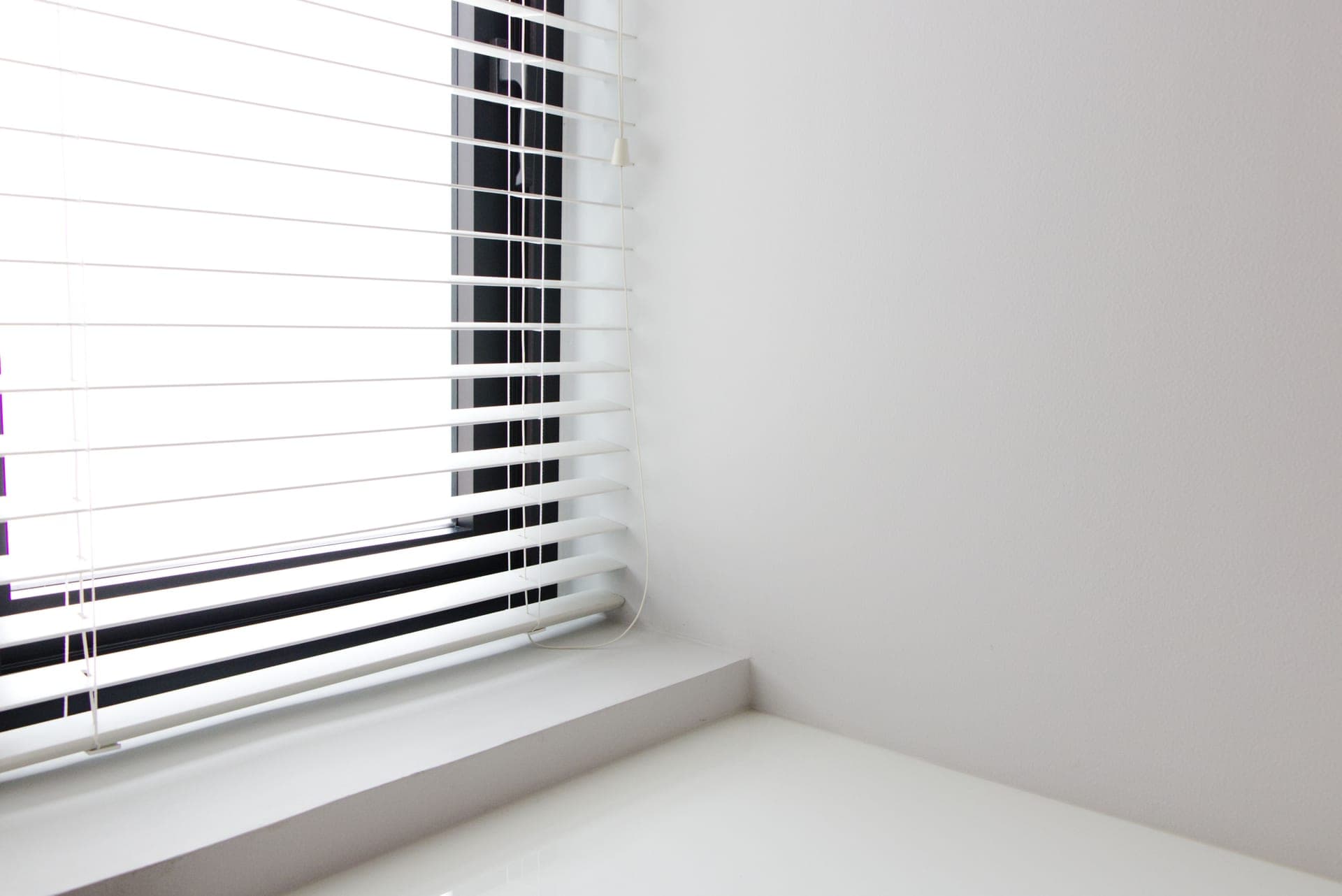
A pull cord on a window blind forms a loop at exactly a toddler's height, and the CPSC counts about nine children under five strangled by one every year. The permanent fix is cordless. The fix for today is scissors.
- By
- Mike M.
- Updated
- Method
- How we choose
We earn a commission if you buy through our links, at no extra cost to you. It never decides the ranking: the method is published. Affiliate disclosure
The hazard
A corded blind has a pull cord that hangs to about the height of a toddler's head, an inner cord that runs through the slats, and often a continuous loop for a roller shade. A child reaches for the cord, turns, and the loop is around the neck; it happens silently, in a crib beside a window or on a sofa under one. The CPSC's 2023 release on its window covering standard states that on average about nine children under five die every year from strangling in window blinds, shades, draperies and other coverings with cords. That is the number behind the CPSC listing window cords among the top hidden hazards in the home for decades.
The federal rule
In November 2022 the CPSC approved a federal safety standard for operating cords on custom window coverings, and at the same time made non-compliant window covering cords a substantial product hazard, incorporating the ANSI/WCMA A100.1-2018 voluntary standard. The practical result: under the 2018 voluntary standard, stock (off-the-shelf) window coverings made for the US market are cordless or have inaccessible cords, and custom coverings followed under the 2022 federal rule. The rules govern what is sold. They do nothing about the blinds already hanging in your house, and every house built before about 2019 has them.
What to do today, for free
Cut the loop. If a pull cord ends in a loop or a joined tassel, cut it into two separate cords and put a separate tassel on each, so there is no closed loop. Tie the cords up high, out of reach, with a cleat or a simple knot around a hook. Move the crib, the toddler bed, the changing table and any chair or bookcase away from every window; a child who cannot reach the cord cannot get tangled in it, and the same move handles window falls, per how to childproof windows. Check the inner cords too: on older horizontal blinds the cords running through the slats can be pulled out into a loop, and the CPSC has run recalls and retrofit programs for exactly that.
The permanent fix: cordless
The CPSC's advice is one sentence: choose cordless window coverings. Cordless blinds lift by a rail you push and pull; cordless shades roll with a spring or a wand. They are not expensive any more, they are what every big-box store sells by default, and a bedroom needs one or two. Do the child's room and the room with the crib first, then the living room, then the rest of the house as blinds wear out. Until each window is done, the wind-ups below hold the cord.
The bridge: wind-ups and cleats
A wind-up is a small plastic spool that mounts high on the window frame: open it, feed the cord through, snap it shut, and turn it to reel the slack up. A cleat is a hook you wrap the cord around. Both work only as long as the last adult wound or wrapped the cord, and both fail the moment someone lowers the blind and walks away; that is the honest limit, and it is why they are a bridge and not the destination. Buy one per corded window, mount it above adult shoulder height, and make winding the cord the same habit as latching a gate. The other cords in the room, the electrical ones, are in how to babyproof cords.
The picks
How we chose
Units we claim to have tested: 0
Everyone in this category says they tested it. We didn't, and we say so. Every pick is scored from the brand's published specs, width and size charts, warranty terms and cited research, against the problem this page is about. The sources are listed at the bottom of the page.
Scores are editorial judgments from that published data, not lab results. Nobody pays for placement, and a missing spec is scored neutral, never guessed. The full rubric is on How We Choose.
- Standards & certification
- 30%
- Installation truth
- 30%
- Toddler resistance
- 20%
- Adult one-hand use
- 5%
- Damage & reversibility
- 5%
- Value
- 10%
The weights this page used for its scores.
FAQ
Questions people ask
How do you babyproof blind cords?
Are corded blinds illegal?
Are blind cord wind-ups safe?
Keep going
Related guides and picks
Update log
What changed
- First published.
Receipts
Sources
- 01CPSC news release, 2023: new federal safety standard for custom window covering cords (accessed Sep 21, 2026)
- 02CPSC news release, 2026: National Window Safety Week, window fall statistics and tips (accessed Sep 21, 2026)
- 03CPSC publication: Childproofing Your Home, 12 Safety Devices to Protect Your Children (accessed Sep 21, 2026)
We don't lab-test gates, locks or anchors, and we don't pretend to. Specs, standards statements and install requirements come from the manufacturer's own pages and manuals (or a named retailer's listing where the brand doesn't publish them); injury data and standards come from the CPSC, ASTM, NEC via ESFI and the AAP, linked above. Prices are set by Amazon and change often, so we don't print them. Where a figure isn't published, we say so. Read the full method.