01 Baby Gates & Stair Safety Best picks
Best extra-tall baby gates: five gates from 36 to 41 inches, and where each one is allowed to go
A standard gate is 29 to 30 inches tall, and a determined two-year-old is over it by the end of the month. The taller gates buy you time - and the one with the only stated JPMA certification is also the only one you cannot put at the top of the stairs.
- By
- Mike M.
- Updated
- Method
- How we choose

We earn a commission if you buy through our links, at no extra cost to you. It never decides the ranking: the method is published. Affiliate disclosure
Quick picks
The short answer
| # | Product | Best for | Score | Price |
|---|---|---|---|---|
| 01 | 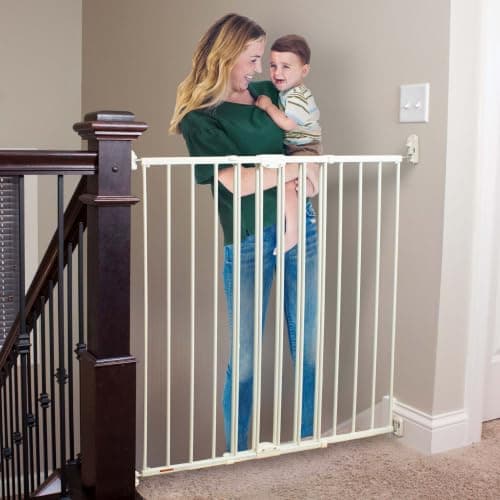 Toddleroo by North States Tall Easy Swing & Lock Gate Series 2 (5052, 36 in tall) The only pick that is extra-tall, hardware-mounted, certified by its maker and stated as safe at the top of a staircase. It needs studs on both sides and it has no auto-close, which is the price of all that. | Best overall: 36 inches and cleared for the top of the stairs | 9.5 / 10 | $79.99Amazon |
| 02 | 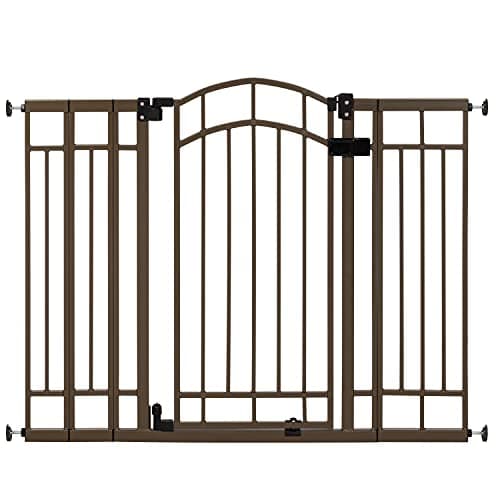 Ingenuity Decorative Extra Tall Gate, 48W Series (07600CZ) 36 inches including the arch, a hardware kit in the box for stair use and a pressure option for doorways, so one gate covers two jobs. No certification is stated anywhere on the listing, and it has four published dead zones in its width range. | Best tall gate that can also pressure-mount | 9.3 / 10 | $89.99Amazon |
| 03 | 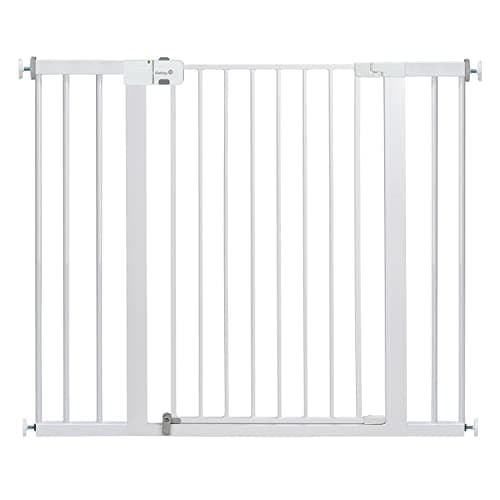 Safety 1st Easy Install Tall & Wide Gate (GA106, 36 in tall) 36 inches, 47 inches of span and the only stated JPMA certification here. Pressure-installed, so its own page rules out the top of a staircase in capital letters - a doorway or hallway gate, and a good one. | Best certified tall gate for a doorway | 9.3 / 10 | $85.99Amazon |
| 04 | 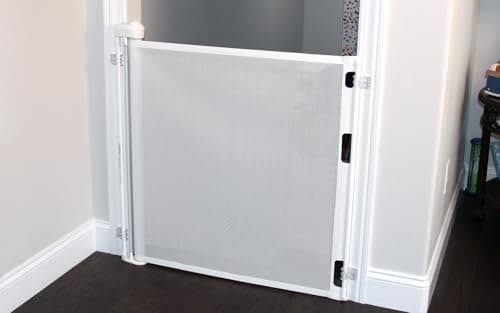 Retract-A-Gate 52 in Retractable Gate 34 inches of mesh on a 38-inch frame, certified for the top and bottom of stairs, mounts at almost any angle and then retracts out of the way. Screws on both sides, the priciest thing here, and the mesh only works pulled across and locked. | Best tall gate for a wide or angled opening | 9.3 / 10 | $149.00Amazon |
| 05 | 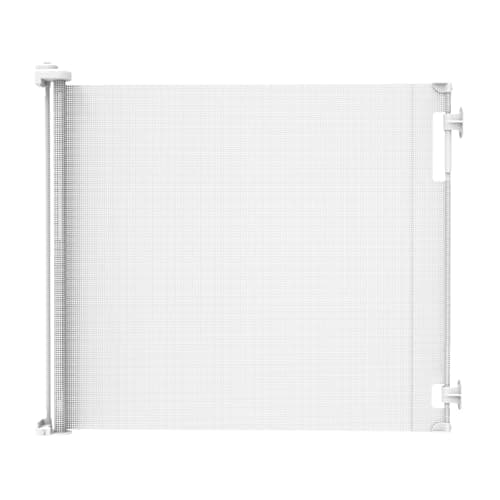 Perma Child Safety Easy Fit Retractable Gate (13-71 in x 41 in) 41 inches is the tallest published height in this group and it costs the least of the five, which is a genuinely odd combination. The mechanism is the budget part: it has to be latched every single time or it is a curtain. | Tallest here, and the cheapest | 8.9 / 10 | $45.99Amazon |
#ad · Prices come live from Amazon, last checked November 4, 2026. Scores are ours, on our published 8.4-9.8 recommendation scale, compiled from standards statements, manuals and specs. Nothing below 8.4 is listed. Tap a row for the full write-up.
What an extra-tall gate actually is
There is no standard height for a baby gate and no legal definition of an extra-tall one, so the phrase means whatever a listing wants it to mean. What there is, is a market convention: almost every gate sold in the United States is 29 to 31 inches tall, because that is the height that stops a child in the age band the federal gate standard is written for. Anything over about 33 inches is sold as tall, and the products that reach 36 inches and up are a small, specific group - five of which we could verify as currently sold with a published height.
The height matters because of a mismatch most parents hit at around 22 months. The federal safety standard for expansion gates, 16 CFR part 1239, incorporates ASTM F1004 and covers gates intended for children 6 to 24 months old. The standard is not wrong - it is a product specification, not a prediction about your child - but a tall, athletic 23-month-old is still inside its scope and over the top of a 30-inch gate in one move. That is the week people start searching for a taller gate, and the question behind the search is almost always the same: can I buy my way out of this for another year?
Sometimes. Six extra inches is a real obstacle to a two-year-old, and the 36-inch gates here are measurably harder to get over than the standard ones in best baby gates. But height is only one of the three things a gate has to get right, and the other two - how it is fixed to the building, and whether it gives a foot something to push against - decide more. The sizing background is in how tall should a baby gate be, and the honest limit on all of it is in when to stop using baby gates.
How we ranked these
The published rubric is on how we choose. On this page the weights are set to answer the question a tall-gate buyer is actually asking, which is not "how tall?" but "will this hold where I need to put it?"
Standards and certification: 25 percent. Three gates here state a third-party mark - Baby Safety Alliance and ASTM on the Toddleroo, JPMA on the Safety 1st, Baby Safety Alliance on the Retract-A-Gate - one states only that it meets ASTM standards, and one states nothing at all. That spread is the single biggest difference between these five products.
Installation truth: 25 percent. On this page we score it as where the gate is allowed to go and what it takes to get it there. The one pressure gate here loses points no matter how well it is made, because the opening where a climbing toddler is in the most danger - the top of a staircase - is the opening its own maker forbids. The Toddleroo loses a little in the other direction: North States rules out drywall anchors, so it is studs or nothing.
Toddler resistance: 25 percent. Scored as how much the height really buys you, including whether the design gives a foot a foothold. Rigid bars with a low rail are easier to climb than you would like; tensioned mesh gives a foot nothing, but only while it is latched. Both retractables carry a per-page override on this metric, down for the latching problem and up for the lack of a foothold.
Value is 15 percent, and adult one-hand use and reversibility 5 percent each. That is a deliberate de-weighting: a tall gate is bought to solve a safety problem that has already started, and convenience is not the deciding factor when the alternative is a child at the top of a flight of stairs. We do not test products. Every figure on this page is quoted from the manufacturer page or a named retailer listing, linked beside the figure, and every pick was confirmed on sale on October 22, 2026.
The certification trade-off
Here is the odd shape of this category, and it is worth stating plainly: the one extra-tall gate with a stated JPMA certification is also the one gate you cannot put at the top of the stairs. The Safety 1st GA106 is pressure-installed, and its own product page carries the line in capital letters - to prevent falls, never use a pressure-installed gate at the top of stairs. Everything else here is hardware-mounted and can go on a staircase; between them they state a Baby Safety Alliance verification, ASTM compliance, or nothing.
The reason for that warning is mechanical, and it gets worse as gates get taller. A pressure gate holds by jamming itself between two faces, with the force applied horizontally at the height of the tension bars. A child pushing or climbing applies force at the top rail, and the taller the gate, the longer that lever is - so a 36-inch pressure gate turns a toddler's shove into more leverage against its own mounting than a 30-inch one does. This is why the 2022 federal rule for expansion gates added a warning-label requirement about using the supplied wall cups, and why the GA106 ships with four cups that are not optional.
So the practical rule is simple. If the opening is the top of a flight of stairs, you need screws: the Toddleroo 5052, the Ingenuity with its hardware kit, or one of the two retractables. If the opening is a doorway, a hallway or the bottom of a staircase, the pressure gate is a perfectly good product and the certification is worth having. The full argument about mounts is in pressure-mounted vs hardware-mounted baby gates, and the dedicated stair shortlist is in best baby gates for stairs.
What a certification mark does and does not buy is worth being precise about too. The mandatory standard is 16 CFR part 1239, which incorporates ASTM F1004: any gate legally sold in the United States has to meet it, whether or not the brand pays for a third-party program. "No certification stated" is not the same as "non-compliant." What a stated mark buys is third-party verification that the maker submitted the product and it passed - a meaningfully different claim from a brand asserting compliance about itself. The detail is in baby gate safety standards explained.
The published heights, side by side
Height on a gate listing is measured in at least three different ways - overall frame, mesh only, or including a decorative arch - so the numbers are not comparable unless you read what each maker counted. Here is what each one publishes.
Four things are worth pulling out of that table. The Retract-A-Gate's 38 inches is the frame and its 34 inches is the mesh, which is the number your child meets - it is the shortest barrier here. The Perma's 41 inches is the tallest published height by a clear three inches, and it is also the cheapest gate on the page: the money went into mesh, not into a mechanism. The Ingenuity's 36 inches is measured including its decorative arch, so the flat top of the barrier sits slightly lower than the number suggests. And the Ingenuity is the only gate here with published dead zones in its width range - it does not fit openings of 32 to 33, 36 to 37, 40 to 41 or 44 to 45 inches, which is unusual enough that measuring first is genuinely not optional.
Width is the other axis and it decides more than people expect. The two rigid stair gates span about 48 inches with the parts in the box, which puts a hallway or a wide kitchen opening in range; the Retract-A-Gate goes to 52 inches and the Perma to 71. If your opening is genuinely wide rather than genuinely tall, read best extra-wide baby gates first and measure with what size baby gate do I need, because a tall gate stretched past its rating is a worse barrier than a short one that fits.
What a taller gate does not fix
Six extra inches of gate solves one specific problem: a child who gets a leg over the top rail of a standard gate. It does not solve the other three ways a gate is defeated, and if the gate you have is failing for one of those reasons, a taller one will fail the same way.
The foothold. Most climbing attempts start with a foot on the bottom rail or the bottom of the mesh, then a second foot on a horizontal bar. The height of the gate is almost irrelevant if the gate is a ladder. Tensioned mesh with no bottom bar is the hardest thing in this category to climb, which is the quiet argument for the two retractables, and the gates built around that idea are in best baby gates without a bottom bar.
The thing dragged over to stand on. A two-year-old brings a step stool, a laundry basket or a toy box to the gate, and the gate is now 36 inches tall from the floor and 24 inches tall from the top of the basket. Clearing the landing and the approach costs nothing and does more than any upgrade. That, and the rest of what changes at this age, is in babyproofing for a 2 year old.
The latch they have watched you open. A child who can work the handle does not need to climb anything. Every gate here uses a two-action, press-and-lift or push-twist release for exactly this reason, and the quiet advantage of the Safety 1st pick is that its red-to-green indicator tells the adult whether the latch caught - which is the real-world failure in most households, not the climbing.
The gate that has outlived its job. There is a point where the honest answer is that gates are over for this child, and buying a taller one is buying a fall from a greater height. If your two-and-a-half-year-old is treating a 36-inch gate as a climbing frame, the next purchase is not a 41-inch gate: it is a stair light, a rule and a door alarm. The two tests we use for that decision are in when to stop using baby gates, and the measures that are not a gate at all are in babyproofing stairs and hallways.
If the gate is really for a dog
A large share of extra-tall gate buyers do not have a climbing toddler at all - they have a dog that clears a 30-inch gate, or a dog and a baby who need to be on opposite sides of the same doorway. The products overlap; the priorities do not.
For a dog, height and span are the whole specification and certification is irrelevant, because none of these standards are written about dogs. That makes the 41-inch Perma the obvious value pick and the Retract-A-Gate the obvious premium one: both are mesh, both are hardware-mounted, and neither gives a paw anything to push off. For a dog and a baby together, the thing to look for is a gate with a lockable pet door, so the cat or the small dog gets through and the baby does not. That is a different shortlist entirely: best baby gates with a pet door ranks those, and baby gate vs pet gate is the difference between the two product categories in one page.
One warning that applies to dogs more than children: a tall pressure gate and a big dog are a bad combination. A 70-pound dog leaning on a 36-inch pressure gate applies more force at the top rail than a toddler ever will, and the gate walks out of the opening over a week. Screws, in that house, are not optional either.
In detail
Every pick, in full
01
Best overall: 36 inches and cleared for the top of the stairs
Toddleroo by North States Tall Easy Swing & Lock Gate Series 2 (5052, 36 in tall)
Our score
9.5 / 10Prevents
The only pick that is extra-tall, hardware-mounted, certified by its maker and stated as safe at the top of a staircase. It needs studs on both sides and it has no auto-close, which is the price of all that.
- Standards status
- Baby Safety Alliance and ASTM certified, as stated by North States
- Installation truth
- North States is explicit that it must be attached directly to a solid surface such as a wooden stud, because drywall anchors have a weight limit - so find the studs before you order. Hardware mount only, tools required, and the condition for stair use is that the gate must never be allowed to swing out over the stairs: set the swing control on install day.
Published specs (tap for source)
Rubric sub-scores (0-10) and this page's weights
- Standards & certification (25%)
- 9
- Installation truth (25%)
- 7
- Toddler resistance (25%)
- 9
- Adult one-hand use (5%)
- 7
- Damage & reversibility (5%)
- 4
- Value (15%)
- 7
What it gets right
- 36 in tall AND stated safe at the top of the stairs, which nothing else here manages
- Certification stated by the manufacturer, not implied
- Nearly 48 in of coverage with no extension to buy
- Swing control locks out the direction that opens over the steps
What it doesn't
- Studs required: North States rules out drywall anchors
- No auto-close, so somebody has to push it shut every time
- The most expensive rigid gate here at list price
- Steel, so it is heavy to swing one-handed
Skip it if…
…there is no stud or solid timber on both sides of the opening; this gate is not an anchors-in-drywall install and its maker says so.
#ad · Price as of November 4, 2026 · Affiliate disclosure for the link to Toddleroo by North States Tall Easy Swing & Lock Gate Series 2 (5052, 36 in tall)
02
Best tall gate that can also pressure-mount
Ingenuity Decorative Extra Tall Gate, 48W Series (07600CZ)
Our score
9.3 / 10Prevents
36 inches including the arch, a hardware kit in the box for stair use and a pressure option for doorways, so one gate covers two jobs. No certification is stated anywhere on the listing, and it has four published dead zones in its width range.
- Standards status
- No certification listed on the Amazon listing
- Installation truth
- Read the fit exclusions before anything else, because they are unusual and the listing publishes them: this gate will not fit openings of 32-33, 36-37, 40-41 or 44-45 inches. Measure first. Pressure mount is for doorways only - stair use requires the included hardware kit, i.e. screws - and the banister side has to be a flat banister, not a turned post.
Published specs (tap for source)
Rubric sub-scores (0-10) and this page's weights
- Standards & certification (25%)
- 5
- Installation truth (25%)
- 8
- Toddler resistance (25%)
- 9
- Adult one-hand use (5%)
- 8
- Damage & reversibility (5%)
- 6
- Value (15%)
- 7
What it gets right
- 36 in tall, which is the answer to a toddler who climbs a 30 in gate
- Hardware kit in the box for wall or flat-banister mounting
- Stair stopper stops the door swinging over the steps
- Auto-closes under 90 degrees, stays open past it
What it doesn't
- No ASTM or JPMA statement on the listing
- Four published dead zones in the width range, so measuring is not optional
- Flat banisters only; a turned newel post needs an adapter kit
Skip it if…
…your opening measures 32-33, 36-37, 40-41 or 44-45 in; the maker says it will not fit.
#ad · Price as of November 4, 2026 · Affiliate disclosure for the link to Ingenuity Decorative Extra Tall Gate, 48W Series (07600CZ)
03
Best certified tall gate for a doorway
Safety 1st Easy Install Tall & Wide Gate (GA106, 36 in tall)
Our score
9.3 / 10Prevents
36 inches, 47 inches of span and the only stated JPMA certification here. Pressure-installed, so its own page rules out the top of a staircase in capital letters - a doorway or hallway gate, and a good one.
- Standards status
- JPMA certified and meets CPSC requirements, as stated by Safety 1st
- Installation truth
- Pressure-installed with four wall cups, and Safety 1st's own page carries the line in capitals: to prevent falls, never use a pressure-installed gate at the top of stairs. The cups are screwed to the wall and stay there; the gate lifts out between visits. At 47 inches of span, hand-tight pressure alone will creep - the cups are what hold it.
Published specs (tap for source)
Rubric sub-scores (0-10) and this page's weights
- Standards & certification (25%)
- 9
- Installation truth (25%)
- 6
- Toddler resistance (25%)
- 7
- Adult one-hand use (5%)
- 8
- Damage & reversibility (5%)
- 7
- Value (15%)
- 6
What it gets right
- 36 in tall with a stated JPMA certification, which no other extra-tall gate here has
- Lock indicator tells you the gate is actually latched
- 47 in of span covers a hallway, not just a doorway
- Lifts out of the wall cups between visits
What it doesn't
- Pressure-installed, so it is banned from the top of the stairs by its own maker
- Bottom bar across the opening to trip on
- The wall cups mean screws if you want it to hold at full width
- Costs more than the taller retractables
Skip it if…
…the opening is the top of a staircase; Safety 1st rules out pressure installation there and a tall pressure gate is still a pressure gate.
#ad · Price as of November 4, 2026 · Affiliate disclosure for the link to Safety 1st Easy Install Tall & Wide Gate (GA106, 36 in tall)
04
Best tall gate for a wide or angled opening
Retract-A-Gate 52 in Retractable Gate
Our score
9.3 / 10Prevents
34 inches of mesh on a 38-inch frame, certified for the top and bottom of stairs, mounts at almost any angle and then retracts out of the way. Screws on both sides, the priciest thing here, and the mesh only works pulled across and locked.
- Standards status
- Baby Safety Alliance verified (formerly JPMA certified); ASTM standards compliance stated by Smart Retract
- Installation truth
- Screws only, no pressure option, with the top bracket at 30.5 in off the floor and the lower brackets 3 to 4 in up. The mesh is a barrier, not a wall: a toddler can lean into it, so the lock has to be engaged every time.
Published specs (tap for source)
Rubric sub-scores (0-10) and this page's weights
- Standards & certification (25%)
- 9
- Installation truth (25%)
- 7
- Toddler resistance (25%)
- 7
- Adult one-hand use (5%)
- 8
- Damage & reversibility (5%)
- 4
- Value (15%)
- 5
What it gets right
- Certified for stairs, which most retractables are not
- Retracts to 3 in when open
- Angled and diagonal installs
- Made in USA
What it doesn't
- Mesh sags if the lock is not set
- Screws on both sides, every time
- Costs more than a rigid gate
Skip it if…
…anyone in the house will leave it retracted; a retractable gate only works when it is pulled across and locked.
#ad · Price as of November 4, 2026 · Affiliate disclosure for the link to Retract-A-Gate 52 in Retractable Gate
05
Tallest here, and the cheapest
Perma Child Safety Easy Fit Retractable Gate (13-71 in x 41 in)
Our score
8.9 / 10Prevents
41 inches is the tallest published height in this group and it costs the least of the five, which is a genuinely odd combination. The mechanism is the budget part: it has to be latched every single time or it is a curtain.
- Standards status
- Meets or exceeds ASTM standards, as stated by Perma Child Safety
- Installation truth
- Hardware-mounted, and the spacers in the box exist because these brackets usually land on a baseboard rather than flush wall. Perma states top and bottom of stairs for this range; find a stud or use the supplied plugs properly, because a retractable's whole load runs through four screws.
Published specs (tap for source)
Rubric sub-scores (0-10) and this page's weights
- Standards & certification (25%)
- 6
- Installation truth (25%)
- 6
- Toddler resistance (25%)
- 7
- Adult one-hand use (5%)
- 7
- Damage & reversibility (5%)
- 4
- Value (15%)
- 10
What it gets right
- 41 in tall for under $35
- No bottom bar
- 71 in of span
- Baseboard spacers included
What it doesn't
- Mesh has to be latched every single time
- No third-party certification named
- Four screws carry everything
Skip it if…
…the gate will be opened dozens of times a day; budget retractable mechanisms are the part that wears.
#ad · Price as of November 4, 2026 · Affiliate disclosure for the link to Perma Child Safety Easy Fit Retractable Gate (13-71 in x 41 in)
Buying notes
Decide the opening before the gate. The top of a staircase rules out the one pressure gate on this page in a single step, before you compare anything else. A doorway or a hallway opens the whole list. Write down which one you have, then shop.
Find the studs first if you are buying the Toddleroo. North States states that it must be attached directly to a solid surface such as a wooden stud and that drywall anchors have a weight limit. A ten-dollar stud finder, run along both sides of the opening before you order, is the difference between the best gate here and a return.
Measure at the height the gate will sit, at the narrowest point. Baseboards, door casing and a bowed wall all eat into the fit range, and a tall gate has more surface to fight with. Both retractables ship with or expect spacers for a baseboard; the rigid gates do not. And check the Ingenuity's published dead zones against your measurement before anything else.
Read what the maker counted. "36 inches" can include a decorative arch and "38 inches" can be a frame around 34 inches of mesh. The number that matters is the height of the part your child has to get over, which is usually the lower of the two.
Price bands, roughly. The budget retractable is the cheapest way to get the most height and is the least expensive product on this page by a wide margin. The three rigid gates sit together in the mid-to-high double digits at list, and the US-made retractable is the most expensive thing here by a distance. Prices move constantly, so the buy buttons go to the live listing rather than to a number we typed once, and the only dollar figures in the cards are manufacturers' own published list prices with the source linked beside them.
Do the wall cups properly. On a pressure gate, and especially a tall one, screw the wall cups to the wall. Four small holes, filled with a dab of filler when the gate years are over, are the difference between a gate and a thing wedged in a doorway. The 2022 federal rule added a label about this because people skip it.
Where this sits in the job. A taller gate is a second-round purchase: it is what you buy when the first gate stopped working, usually somewhere between 20 months and three years. If you are still on the first round, the brand-level decision most people are weighing is in Regalo vs Safety 1st baby gates, and the fitting itself is in how to install a baby gate.
How we chose
How these picks were chosen
Every product currently sold for this job was read and compared, then scored against the exact problem this page is about: the manufacturer's published specs, the opening and fit charts, the safety standard it states, the install conditions in the manual, the warranty terms and the cited research. The sources are listed at the bottom of the page.
Scores come from that published data on a rubric you can read, a missing spec is scored neutral rather than guessed, and nobody pays for placement. The full rubric is on How We Choose.
- Standards & certification
- 25%
- Installation truth
- 25%
- Toddler resistance
- 25%
- Adult one-hand use
- 5%
- Damage & reversibility
- 5%
- Value
- 15%
The weights that ordered this page. Each product's score is published on our 8.4-9.8 recommendation scale and is the same wherever it appears.
FAQ
Questions people ask
How tall should a baby gate be for a climber?
Can I use an extra-tall pressure gate at the top of the stairs?
What is the tallest baby gate you can buy?
Which extra-tall gate can go at the top of the stairs?
Are extra-tall baby gates certified?
Will a 36-inch gate work for a large dog?
Keep going
Related guides and picks
- How tall should a baby gate beThe sizing background behind this page: standard heights, and what the standard assumes.
- Best baby gates for stairsIf the tall gate is for a staircase, the full hardware-mounted shortlist.
- Best baby gates without a bottom barThe no-foothold designs, which beat height for a climber.
- When to stop using baby gatesThe point at which a taller gate is the wrong purchase.
Update log
What changed
- First published.
Receipts
Sources
- 01CPSC: Business guidance for gates and enclosures, 16 CFR part 1239 / ASTM F1004 (accessed Sep 21, 2026)
- 02Federal Register, Nov 14, 2022: Safety Standard for Expansion Gates and Expandable Enclosures (ASTM F1004-22, wall-cup warning label) (accessed Sep 21, 2026)
- 03ASTM International: F1004-22 Standard Consumer Safety Specification for Expansion Gates and Expandable Enclosures (accessed Sep 21, 2026)
Specs, standards statements and install requirements come from the manufacturer's own pages and manuals (or a named retailer's listing where the brand doesn't publish them); injury data and standards come from the CPSC, ASTM, NEC via ESFI and the AAP, linked above. Prices are set by Amazon and change often, so the buy button always takes you to the live listing. Read the full method.