07 Baby Monitors (No WiFi) Head to head
WiFi vs non-WiFi baby monitors: one has an account to steal and the other has a range limit
A smart monitor is an internet camera in a nursery. A closed-circuit monitor is two radios that only know about each other. The trade is reach for exposure, and the FTC's own cases make the exposure concrete.
- By
- Mike M.
- Updated
- Method
- How we choose
We earn a commission if you buy through our links, at no extra cost to you. It never decides the ranking: the method is published. Affiliate disclosure
The verdict
Pick one in ten seconds
If you choose closed circuit
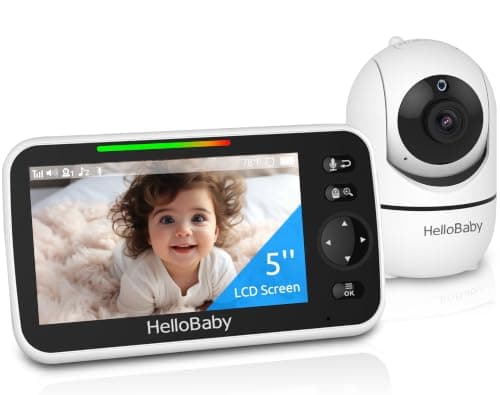
HelloBaby HB6550 5-Inch No-WiFi Baby Monitor
9.6 / 10The default no-WiFi video monitor: 5-inch screen, steerable camera, 30-hour audio battery, FHSS link.
$59.98Amazon#ad · Price as of November 6, 2026 · Affiliate disclosure for the link to HelloBaby HB6550 5-Inch No-WiFi Baby Monitor
If you want a household brand
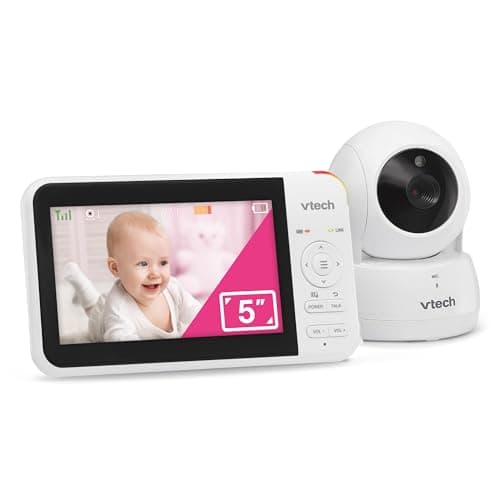
VTech VM924 5-Inch No-WiFi Video Monitor
9.4 / 10Encrypted FHSS from VTech, with published battery figures for both video and audio modes.
$68.95Amazon#ad · Price as of November 6, 2026 · Affiliate disclosure for the link to VTech VM924 5-Inch No-WiFi Video Monitor
If you do not need a picture
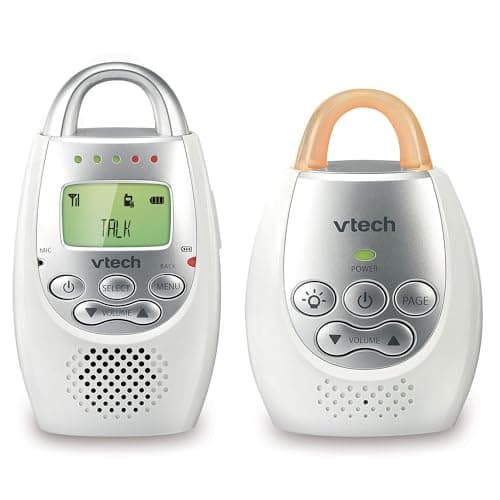
VTech DM221 DECT 6.0 Audio Monitor
9.6 / 10DECT 6.0 audio with a vibrating alert, a sound meter and nothing to log into.
$36.95Amazon#ad · Price as of November 6, 2026 · Affiliate disclosure for the link to VTech DM221 DECT 6.0 Audio Monitor
The actual technical difference
A closed-circuit monitor is a pair of radios. The camera transmits directly to the parent unit on an unlicensed band - for video, 2.4 GHz using frequency-hopping spread spectrum, which the FCC regulates under 47 CFR 15.247 with set channel counts, dwell times and power limits; for audio, usually DECT 6.0, which in the US runs in the 1920-1930 MHz unlicensed PCS band under 47 CFR 15.323. There is no router in the path, no server, no account and no app. The picture exists in exactly two places: the camera and the screen in your hand.
A WiFi monitor is an internet camera. It joins your home network, authenticates to a manufacturer's service, and streams through that service to a phone app. The video may be relayed or recorded by the vendor. You get an account, and the account is the thing with a door in it.
The privacy case, with the receipts
This is not hypothetical and it is not new. In September 2013 the FTC announced a settlement with TRENDnet, which marketed internet-connected cameras for uses including baby monitoring and described them as secure; faulty software left the feeds exposed and hackers posted links to the live video of nearly 700 of them. The settlement required independent third-party security assessments every other year for twenty years.
The pattern did not stop with one manufacturer. The FTC's complaint against Ring states that more than 55,000 US customer accounts were affected by credential stuffing and brute-force attacks between January 2019 and March 2020 - attacks on the account, not on the device. That is the useful distinction: most nursery-camera incidents are not someone breaking an encryption scheme, they are someone using a reused password. The FTC's own consumer advice on home cameras is accordingly about defaults, unique passwords, encryption and firewalls.
A closed-circuit monitor removes that entire class of risk because there is no credential to stuff. It does not make the radio link unbreakable, and no listing we have read in this category claims conformance to ASTM F2951, the consumer safety specification for baby monitors. What it does is reduce the number of people who could possibly reach your nursery feed to the number of people inside radio range of your house.
Range: the one place WiFi wins outright
A WiFi monitor has no range limit. You can check the nursery from a desk, a restaurant or another country, and that is a real capability a closed-circuit monitor cannot imitate at any price. A closed-circuit monitor stops where its radio stops - typically a stated 1,000 feet, which means open air and line of sight, and in a real house means something considerably less. The models that publish through-wall figures instead of one optimistic number are on best baby monitors with long range.
Be honest with yourself about which range you need. "Watching the baby from the office" is a different product from "hearing the baby from the garden", and the second is what most families actually do all day.
Battery, lag and what happens when the internet drops
Closed-circuit parent units are purpose-built screens with nothing else to do, so their battery figures are long: VTech publishes up to 17 hours of video and up to 31 hours audio-only on the VM924, and HelloBaby claims up to 30 hours in audio-saving mode on the HB6550. A WiFi monitor's battery is your phone's, and your phone is doing eleven other things.
Latency goes the same way: a direct radio hop is quicker than a round trip through a vendor's service, which is why closed-circuit two-way talk feels like an intercom and app talk-back often does not. And when the broadband drops - during a storm, during an outage, during the hour the router is rebooting itself - the closed-circuit monitor is unaffected and the smart one is a brick. That is the argument people underrate until the first time it happens.
In detail
Both contenders, in full
If you choose closed circuit
HelloBaby HB6550 5-Inch No-WiFi Baby Monitor
Our score
9.6 / 10The default no-WiFi video monitor: 5-inch screen, steerable camera, 30-hour audio battery, FHSS link.
- Standards status
- Listing states a 2.4 GHz FHSS link with digital encryption and no WiFi, app or account. No ASTM F2951 conformance claim on the listing consulted.
- Installation truth
- The camera needs mains power, and that cord is the hazard, not the camera. CPSC and JPMA say to keep every monitor cord at least three feet from any part of the crib, wall-mounted cameras included. Decide where the outlet is before you decide where the camera goes.
Published specs (tap for source)
Rubric sub-scores (0-10) and this page's weights
- Standards & certification (25%)
- 6
- Installation truth (20%)
- 8
- Toddler resistance (15%)
- 8
- Adult one-hand use (20%)
- 9
- Damage & reversibility (5%)
- 7
- Value (15%)
- 9
What it gets right
- Closed 2.4 GHz FHSS link with nothing to log into
- 30 hours of battery in audio-only mode
- Pan, tilt and zoom from the parent unit
- Takes up to four cameras later
What it doesn't
- No published ASTM F2951 statement
- 1000 ft is an open-air figure, not a through-wall one
- No local recording
Skip it if…
…you want to check the nursery from the office; a closed-circuit monitor stops at the end of its own range.
#ad · Price as of November 6, 2026 · Affiliate disclosure for the link to HelloBaby HB6550 5-Inch No-WiFi Baby Monitor
If you want a household brand
VTech VM924 5-Inch No-WiFi Video Monitor
Our score
9.4 / 10Encrypted FHSS from VTech, with published battery figures for both video and audio modes.
- Standards status
- Listing states encrypted FHSS transmission directly between camera and parent unit, with no internet connection, cloud storage or account. No ASTM F2951 conformance claim on the listing consulted.
- Installation truth
- The wall-mount bracket is included, which makes it easy to put the camera high - and that is exactly when people forget the cord. Mount the camera, then run the cord away from the crib: CPSC and JPMA say at least three feet from every side.
Published specs (tap for source)
Rubric sub-scores (0-10) and this page's weights
- Standards & certification (25%)
- 6
- Installation truth (20%)
- 8
- Toddler resistance (15%)
- 8
- Adult one-hand use (20%)
- 8
- Damage & reversibility (5%)
- 7
- Value (15%)
- 7
What it gets right
- 360-degree pan from the parent unit
- Wall-mount bracket included
- Published battery figures for both video and audio modes
- Sound-activated screen keeps the display dark until the baby stirs
What it doesn't
- 17 hours of video is half what the HelloBaby claims in audio mode
- No published ASTM F2951 statement
- Two-camera and three-camera versions are separate purchases
Skip it if…
…you need to watch two rooms; buy the VM924-2 kit rather than adding to this one.
#ad · Price as of November 6, 2026 · Affiliate disclosure for the link to VTech VM924 5-Inch No-WiFi Video Monitor
If you do not need a picture
VTech DM221 DECT 6.0 Audio Monitor
Our score
9.6 / 10DECT 6.0 audio with a vibrating alert, a sound meter and nothing to log into.
- Standards status
- Listing states DECT 6.0 digital transmission. In the US that is the 1920-1930 MHz unlicensed PCS band, which the FCC governs under 47 CFR 15.323 and has confirmed DECT equipment may use. No ASTM F2951 conformance claim on the listing consulted.
- Installation truth
- The baby unit plugs into the wall and has a night light on it, which makes it tempting to put on the crib rail. Do not: CPSC and JPMA recorded seven cord strangulation deaths since 2002, and the rule is three feet from every side of the crib.
Published specs (tap for source)
Rubric sub-scores (0-10) and this page's weights
- Standards & certification (25%)
- 7
- Installation truth (20%)
- 8
- Toddler resistance (15%)
- 8
- Adult one-hand use (20%)
- 8
- Damage & reversibility (5%)
- 8
- Value (15%)
- 8
What it gets right
- DECT 6.0 means silence until the baby makes a sound
- Vibrating alert and a visual sound meter
- Talk-back from the parent unit
- Adjustable microphone sensitivity
What it doesn't
- VTech itself says battery-only runtime is short
- No video, by design
- No published ASTM F2951 statement
Skip it if…
…you want to see whether the crying baby is standing up; that is a video job.
#ad · Price as of November 6, 2026 · Affiliate disclosure for the link to VTech DM221 DECT 6.0 Audio Monitor
Who should buy which
The hazard both types share
Neither choice changes the one thing in this purchase with a death toll attached. CPSC and JPMA have recorded seven children strangled in baby monitor cords since 2002 and three more near-strangulations, with victims aged six to twenty months, and two separate recalls - Summer Infant in 2011 and Angelcare's 600,000-unit repair in 2013 - came out of exactly that. Smart or closed, the camera needs mains power and the cord needs to be three feet from every side of the crib. That page is baby monitor mounting and cord safety.
How we chose
How these picks were chosen
Every product currently sold for this job was read and compared, then scored against the exact problem this page is about: the manufacturer's published specs, the opening and fit charts, the safety standard it states, the install conditions in the manual, the warranty terms and the cited research. The sources are listed at the bottom of the page.
Scores come from that published data on a rubric you can read, a missing spec is scored neutral rather than guessed, and nobody pays for placement. The full rubric is on How We Choose.
- Standards & certification
- 25%
- Installation truth
- 20%
- Toddler resistance
- 15%
- Adult one-hand use
- 20%
- Damage & reversibility
- 5%
- Value
- 15%
The weights that ordered this page. Each product's score is published on our 8.4-9.8 recommendation scale and is the same wherever it appears.
FAQ
Questions people ask
Are non-WiFi baby monitors more secure than WiFi ones?
Can someone nearby pick up a non-WiFi baby monitor?
Does a non-WiFi baby monitor work during an internet outage?
Do WiFi baby monitors need a subscription?
Which has better battery life?
Keep going
Related guides and picks
Update log
What changed
- First published.
Receipts
Sources
- 01FTC news release, Sep 2013: TRENDnet settles charges that its internet-connected cameras, marketed for baby monitoring, were not secure - hackers posted links to the live feeds of nearly 700 cameras (accessed Nov 5, 2026)
- 02FTC complaint against Ring LLC: more than 55,000 US customer accounts affected by credential stuffing and brute-force attacks between January 2019 and March 2020 (accessed Nov 5, 2026)
- 03FTC consumer advice: How To Secure Your Home Security Cameras (accessed Nov 5, 2026)
- 0447 CFR 15.247: FCC rules for unlicensed operation in 902-928 MHz, 2400-2483.5 MHz and 5725-5850 MHz, including the frequency-hopping channel, dwell-time and power limits (accessed Nov 5, 2026)
- 0547 CFR 15.323: FCC specific requirements for unlicensed PCS devices in the 1920-1930 MHz band, the band DECT cordless equipment uses in the US (accessed Nov 5, 2026)
- 06FCC 12-33 Report and Order, Docket 10-97: unlicensed PCS devices in 1920-1930 MHz may use DECT technology; UPCS devices get no interference protection (accessed Nov 5, 2026)
- 07ASTM International: F2951-19(2024) Standard Consumer Safety Specification for Baby Monitors - corded audio, video and motion-sensor monitors, written around the cord strangulation incidents CPSC identified (accessed Nov 5, 2026)
- 08CPSC/JPMA publication 5066, July 2012: Infants and Toddlers Can Strangle in Baby Monitor Cords - seven deaths since 2002, three near-strangulations, victims 6 to 20 months, cords at least three feet from the crib (accessed Nov 5, 2026)
Specs, standards statements and install requirements come from the manufacturer's own pages and manuals (or a named retailer's listing where the brand doesn't publish them); injury data and standards come from the CPSC, ASTM, NEC via ESFI and the AAP, linked above. Prices are set by Amazon and change often, so the buy button always takes you to the live listing. Read the full method.