07 Baby Monitors (No WiFi) Guide
Baby monitor mounting and cord safety: the camera is the easy part, the cord is the one with a recall history
Seven children have been strangled in baby monitor cords since 2002, and in one case the camera was already on the wall. Height is not the safeguard. Distance is, and three feet is the number.
- By
- Mike M.
- Updated
- Method
- How we choose
We earn a commission if you buy through our links, at no extra cost to you. It never decides the ranking: the method is published. Affiliate disclosure
The rule, and where it comes from
In July 2012 the CPSC and the Juvenile Products Manufacturers Association published a joint warning, Safe and Sound Zone, after seven infants and toddlers were strangled in baby monitor cords since 2002, with three more near-strangulations. The victims were between six and twenty months old. The instruction was specific and has not changed:
Two recalls sit behind that guidance. In 2011 Summer Infant recalled video monitors with cords after two strangulation deaths, adding a permanent on-product warning label and revised instructions. In November 2013 Angelcare recalled about 600,000 Movement and Sound monitors for repair after two more: the sensor pad under the mattress was attached to roughly eleven feet of permanently connected cord, which could be pulled into the crib. The children were eight and thirteen months old. The remedy was a kit of rigid cord covers and a new warning label.
There is a voluntary standard for this product class - ASTM F2951, Standard Consumer Safety Specification for Baby Monitors, currently F2951-19 reapproved in 2024 - and it was written around the incidents CPSC identified, including strangulations from entanglement in cords. It is worth knowing it exists. It is also worth knowing that none of the monitor listings we read for this section claims conformance to it, which is exactly why the placement is on you.
Why mounting it on the wall is not enough
This is the mistake that catches careful parents. In the Summer Infant recall, one of the incidents involved a 20-month-old in Pittsburgh found in his crib with the camera cord around his neck - and the camera was mounted on the wall. The CPSC notice makes the point directly by telling parents to check monitors "including those mounted on the wall".
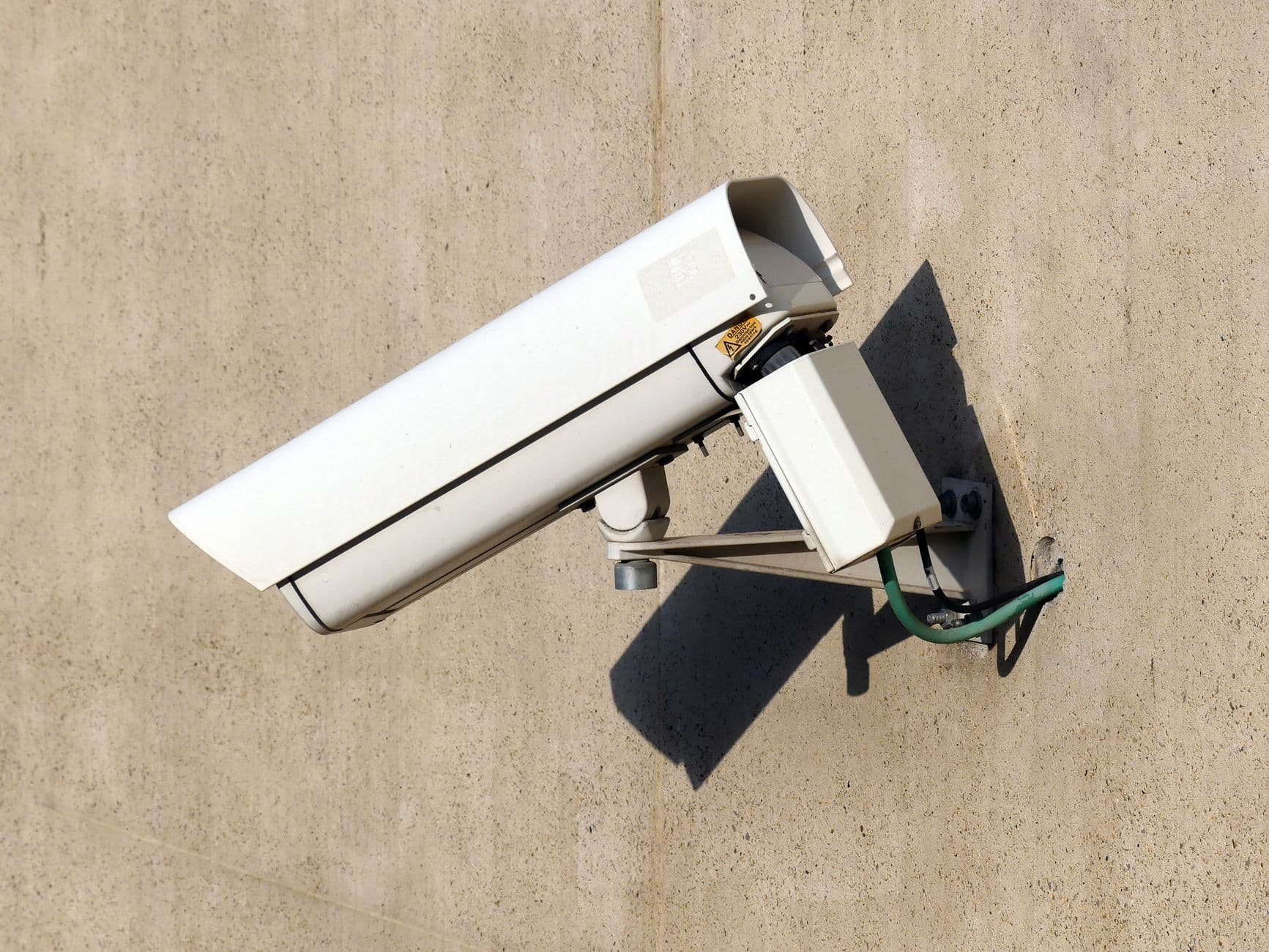
Height defeats a crawler on the floor. It does nothing about a standing toddler who can reach over a rail, and it does nothing at all if the cord drops down the wall beside the crib on its way to the outlet. What a mount buys you is the ability to put the camera somewhere the cord can run away from the crib rather than towards it. Use it for that.
Where the camera goes
Start with a tape measure, not a camera. Mark three feet out from the head, the foot and both long sides of the crib. Everything with a cord lives outside that boundary. Then look for a high corner on the far side of the room: from a corner at picture-rail height, a camera with 90 to 120 degrees of tilt sees the whole mattress, which is the frame you actually want - you are looking for a child standing, tangled or out of the crib, not a close-up of a face.
Check two things before you stick anything down. First, the pan and tilt range of your specific camera against the angle you are proposing; a camera that pans 355 degrees horizontally but only tilts 120 vertically cannot look straight down from directly above a crib. Second, the outlet. If the only socket in reach sits behind the crib, the answer is to move the crib or move the camera, not to run the cord across the top of it. Where that socket also needs covering, the picks are on best outlet covers for plugs in use.
Avoid the shelf. A freestanding shelf or a stack of books puts a hard object and a camera above a child who will eventually pull on the cord, and the thing that comes down is not just the camera. An adhesive corner mount has no tipping mass at all.
What to do with the cord
Three jobs, in this order. Shorten it. Most monitor cords are far longer than the run you need and the surplus hangs as a loop, which is the shape that strangles. A cord shortener winds the slack into a spool and removes the loop rather than hiding it - this is the first thing to fit, and it costs a few dollars. Route it. A slim self-adhesive raceway takes the remaining cord straight up a wall or down a corner, so there is nothing loose to grab. D-Line's micro raceway takes a single cord up to a quarter inch in diameter, which covers a monitor lead and not much else - measure first. Re-check it. The three-foot zone is not fixed: it moves when you lower the mattress, move the crib or add a chair the child can climb.
The same logic applies to everything else plugged in near a sleep space - the nightlight, the sound machine, the phone charger, the humidifier. If it has a cord and it is within three feet of the crib, it is the same hazard with a different label on it. The whole-room version of this job is how to babyproof cords, and the looped cords on the window are a separate and even more dangerous category covered on blind cord safety.
What to buy for this job
The two-minute check
Stand at the crib and look at it the way a child would. Can you see a cord from inside the crib? Can you reach one with an arm over the rail? Is anything resting on the rail, the headboard or a bumper? Is the mattress at its lowest setting, and does the three-foot zone still hold at that height? Then repeat it in whatever room the second camera is in, because the second camera is the one nobody re-checks.
Do the same walk once a season and after any furniture change. It takes two minutes and it is the only part of this section that is about an injury rather than a feature. The rest of the room is babyproofing the nursery and bedroom, and the monitors themselves are on best no-WiFi baby monitors.
How we chose
How these picks were chosen
Every product currently sold for this job was read and compared, then scored against the exact problem this page is about: the manufacturer's published specs, the opening and fit charts, the safety standard it states, the install conditions in the manual, the warranty terms and the cited research. The sources are listed at the bottom of the page.
Scores come from that published data on a rubric you can read, a missing spec is scored neutral rather than guessed, and nobody pays for placement. The full rubric is on How We Choose.
- Standards & certification
- 20%
- Installation truth
- 20%
- Toddler resistance
- 15%
- Adult one-hand use
- 10%
- Damage & reversibility
- 25%
- Value
- 10%
The weights that ordered this page. Each product's score is published on our 8.4-9.8 recommendation scale and is the same wherever it appears.
FAQ
Questions people ask
How far should a baby monitor be from the crib?
Is it safe to mount a baby monitor on the wall?
Can I put a baby monitor on the crib rail?
How do I mount a baby monitor without drilling?
What do I do with the extra monitor cord?
Is there a safety standard for baby monitors?
Keep going
Related guides and picks
Update log
What changed
- First published.
Receipts
Sources
- 01CPSC/JPMA publication 5066, July 2012: Infants and Toddlers Can Strangle in Baby Monitor Cords - seven deaths since 2002, three near-strangulations, victims 6 to 20 months, cords at least three feet from the crib (accessed Nov 5, 2026)
- 02CPSC recall 14-028, Nov 21, 2013: Angelcare recalls to repair about 600,000 Movement and Sound Monitors after two cord strangulation deaths (accessed Nov 5, 2026)
- 03CPSC recall, 2011: two strangulation deaths prompt Summer Infant to recall video baby monitors with cords, new on-product label and instructions (accessed Nov 5, 2026)
- 04ASTM International: F2951-19(2024) Standard Consumer Safety Specification for Baby Monitors - corded audio, video and motion-sensor monitors, written around the cord strangulation incidents CPSC identified (accessed Nov 5, 2026)
- 05CPSC news release, 2023: new federal safety standard for custom window covering cords (accessed Sep 21, 2026)
Specs, standards statements and install requirements come from the manufacturer's own pages and manuals (or a named retailer's listing where the brand doesn't publish them); injury data and standards come from the CPSC, ASTM, NEC via ESFI and the AAP, linked above. Prices are set by Amazon and change often, so the buy button always takes you to the live listing. Read the full method.