03 Furniture Anchors & Tip-Over Best picks
Best anti-tip kits for mirrors: a leaning mirror is the one piece of furniture that is already falling
A dresser has to be climbed before it tips. A tall leaning mirror only has to be nudged, and what comes down is glass, at a toddler's head height, with nothing to break the fall.
- By
- Mike M.
- Updated
- Method
- How we choose
We earn a commission if you buy through our links, at no extra cost to you. It never decides the ranking: the method is published. Affiliate disclosure
Quick picks
The short answer
| # | Product | Best for | Score | Price |
|---|---|---|---|---|
| 01 | 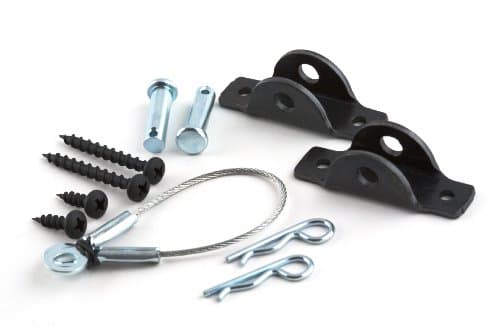 Hangman Anti-Tip Kit (TK-400) Two steel brackets and a galvanized aircraft cable, rated by Hangman at 400 pounds. Nothing to fray and no adhesive to let go, which is what you want behind a sheet of glass. | Best overall: steel cable, 400 lb rating | 9.2 / 10 | $9.99Amazon |
| 02 | 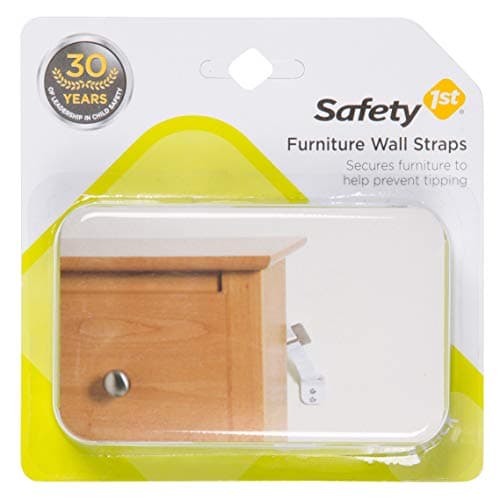 Safety 1st Furniture Wall Straps (2 pack) Two woven straps adjustable from 7 to 16 inches, screwed at both ends. Flat enough to sit behind a mirror that leans close to the wall, and cheap enough to use two. | Best for a slim frame | 8.9 / 10 | $5.99Amazon |
| 03 | 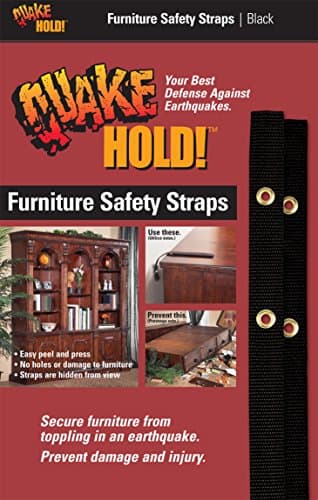 QuakeHOLD! Furniture Strap (Model 4160) Peel-and-press to the mirror, screw into the stud at the wall end. The compromise for an antique or veneered frame you are not willing to drill - and it needs a flat, sealed back to stick to. | Best when you cannot screw into the frame | 8.9 / 10 | $9.06Amazon |
#ad · Prices come live from Amazon, last checked November 4, 2026. Scores are ours, on our published 8.4-9.8 recommendation scale, compiled from standards statements, manuals and specs. Nothing below 8.4 is listed. Tap a row for the full write-up.
Why a mirror is not a dresser
The CPSC's tip-over work is built around furniture and televisions, and the advice that comes out of it - anchor it, use a stud, pull it tight - applies to a mirror too. What changes is the physics and the consequence.
A chest of drawers tips when a child climbs it, because the open drawer moves the center of gravity out past the front feet. That takes a deliberate act. A tall leaning mirror is already balanced at an angle against a wall with its whole weight resting on two small points on the floor, so it tips when the floor is bumped, when a toddler pulls up on the frame, when a door slams, or when a rug slides. It does not need climbing. It needs a nudge.
And the thing that arrives is a sheet of glass, usually unlaminated, falling edge-first at roughly the height of a standing toddler. That combination - low effort to trigger, high consequence - is why a mirror belongs on the short list of pieces worth anchoring even in a house with no climbing child, alongside the dresser and the TV. The wider list is on what furniture needs to be anchored.
How we ranked these
This page uses the site's default weighting: standards 25, installation truth 20, resistance 20, adult usability 10, reversibility 10, value 15. No anti-tip kit here states a certification to the furniture anchor standard, so the standards score reflects whether the maker publishes a load rating at all - Hangman does, at 400 pounds, and the other two do not. We do not load-test anchors; these are judgments from published data, and the rubric is on how we choose.
Where the screw goes on a mirror
This is the question that stops people, and it is the reason mirrors go unanchored in houses where the dresser got done years ago. A dresser offers a flat back panel and a solid top rail. A leaning mirror offers a frame, a backing board that is often hardboard or cardboard, and nothing else.
Find the thickest wood. On most floor mirrors that is the top rail of the frame or the corner where two sides join. Use a short screw - shorter than the frame is deep, so it cannot push through and crack the glass bed - and drill a pilot hole first. Mirror frames split.
Never screw into the backing board. The thin panel across the back holds dust out and nothing in. A screw in it will pull out under the first real load, which is exactly when you need it.
Two anchors, not one, on anything over about four feet. A single central anchor lets the mirror pivot. Two, placed near the top corners, stop rotation as well as fall.
Leave the lean, remove the slide. The anchor is there to catch a fall, not to hold the mirror up. Keep the cable or strap short enough that the mirror cannot travel more than an inch or two forward before it catches, and put something grippy under the feet so the base cannot skate out on a hard floor. The same wall-type rules apply as anywhere else in the house: furniture anchors for drywall, plaster and brick covers what to do when the stud is not where you need it.
The two screwed kits side by side
| Spec | Hangman Anti-Tip Kit (TK-400) | Safety 1st Furniture Wall Straps (2 pack) |
|---|---|---|
| Rating | 400 pound falling furniture prevention device | Not published |
| Pack | 1 kit | Two woven straps |
| Adjustment | Not published | 7 in to 16 in |
| Price | $14.99 | $9.99 |
The choice between these two is thickness and rating. Hangman gives you a steel bracket and a published number; Safety 1st gives you two low-profile woven straps for less money, which matters if the mirror leans almost flat to the wall and a steel bracket would hold it proud. For a heavy antique mirror, take the rating. For a slim modern one in a rented bedroom, two straps are the sane answer.
Hanging it instead, and when that is better
The honest hierarchy for a tall mirror in a house with a small child goes: hang it on the wall, or anchor it, or move it out of the room. Hanging is the best of the three, because a mirror on the wall is not a tip-over risk at all, and modern French-cleat hardware makes it a twenty-minute job on a stud.
Two caveats. Hang the mirror high enough that a child cannot reach the bottom edge and swing on it, and use hardware rated well above the mirror's weight - mirrors are heavier than they look because the glass is thick. If you rent and cannot hang it, anchoring the lean is the fallback, and the whole rental argument about two small screw holes is on anchoring furniture in a rental.
The rest of the room
A floor mirror usually lives in a bedroom, which means the same twenty minutes should deal with the dresser beside it and anything else tall. The two with the clearest injury data behind them are the dresser and the television, and the step-by-steps are on how to anchor a dresser and how to anchor a TV.
If you want the argument for doing any of this rather than the method, including what the federal dresser rule does and does not cover, do you really need to anchor furniture has the numbers. The ranked kits across every kind of furniture are on best furniture anchors.
In detail
Every pick, in full
01
Best overall: steel cable, 400 lb rating
Hangman Anti-Tip Kit (TK-400)
Our score
9.2 / 10Prevents
Two steel brackets and a galvanized aircraft cable, rated by Hangman at 400 pounds. Nothing to fray and no adhesive to let go, which is what you want behind a sheet of glass.
- Standards status
- 400 lb rating stated by Hangman; no ASTM F3096 statement on the listings consulted
- Installation truth
- Both ends screw in: one into the furniture back or top, one into a wall stud. There is no adhesive fallback, which is the point. If the stud is not where the dresser is, move the dresser, not the anchor.
Published specs (tap for source)
Rubric sub-scores (0-10) and this page's weights
- Standards & certification (25%)
- 6
- Installation truth (20%)
- 8
- Toddler resistance (20%)
- 10
- Adult one-hand use (10%)
- 8
- Damage & reversibility (10%)
- 3
- Value (15%)
- 8
What it gets right
- Steel and cable, no strap
- 400 lb rating published
- Tamper-resistant once screwed
- One kit per piece is usually enough
What it doesn't
- Two screwed ends, no renter option
- Cable has a little slack by design
- Black or plain steel only
Skip it if…
…you cannot screw into a stud behind the piece; this kit has no adhesive or drywall mode.
#ad · Price as of November 4, 2026 · Affiliate disclosure for the link to Hangman Anti-Tip Kit (TK-400)
02
Best for a slim frame
Safety 1st Furniture Wall Straps (2 pack)
Our score
8.9 / 10Prevents
Two woven straps adjustable from 7 to 16 inches, screwed at both ends. Flat enough to sit behind a mirror that leans close to the wall, and cheap enough to use two.
- Standards status
- No load rating or standard published on the Safety 1st page
- Installation truth
- Screws at both ends; the adjustable length is the feature, because it lets you pull the strap taut so the dresser cannot rock forward before the strap catches.
Published specs (tap for source)
Rubric sub-scores (0-10) and this page's weights
- Standards & certification (25%)
- 3
- Installation truth (20%)
- 8
- Toddler resistance (20%)
- 7
- Adult one-hand use (10%)
- 8
- Damage & reversibility (10%)
- 3
- Value (15%)
- 9
What it gets right
- Adjustable length
- Two per pack
- Cheap and everywhere
What it doesn't
- No rating published
- Woven strap, not cable
- Needs screws both ends
Skip it if…
…you want a published load rating; Hangman states one, this does not.
#ad · Price as of November 4, 2026 · Affiliate disclosure for the link to Safety 1st Furniture Wall Straps (2 pack)
03
Best when you cannot screw into the frame
QuakeHOLD! Furniture Strap (Model 4160)
Our score
8.9 / 10Prevents
Peel-and-press to the mirror, screw into the stud at the wall end. The compromise for an antique or veneered frame you are not willing to drill - and it needs a flat, sealed back to stick to.
- Standards status
- No load rating or standard published on the QuakeHOLD! page
- Installation truth
- The furniture end is adhesive, so it depends on a clean flat panel on the back of the piece; the wall end must be a stud. It is half a no-drill anchor, and the half that matters still gets a screw.
Published specs (tap for source)
Rubric sub-scores (0-10) and this page's weights
- Standards & certification (25%)
- 3
- Installation truth (20%)
- 7
- Toddler resistance (20%)
- 7
- Adult one-hand use (10%)
- 8
- Damage & reversibility (10%)
- 6
- Value (15%)
- 8
What it gets right
- No holes in the furniture
- Five colors to hide
- Two straps per piece
What it doesn't
- No load rating published
- Adhesive on the furniture side
- Nylon
Skip it if…
…the back of the piece is unfinished, dusty or slatted; adhesive needs a sealed flat panel.
#ad · Price as of November 4, 2026 · Affiliate disclosure for the link to QuakeHOLD! Furniture Strap (Model 4160)
How many kits to buy
One kit per mirror up to about four feet tall, two for anything taller or heavier, and remember the QuakeHOLD and Safety 1st packs contain two straps each, which is one piece of furniture's worth rather than two. If you are doing the mirror and the dresser in the same room on the same afternoon, buy for both and only get the drill out once.
A word about the glass itself
Anchoring stops the mirror falling. It does nothing about what happens if the glass is struck by a thrown toy. If the mirror is going to live in a toddler's room, a shatter-resistant film applied to the back of the glass is a cheap second layer, and a mirror with a frame deep enough to stand proud of the glass protects the edge, which is where chips start.
Who should skip these
How we chose
How these picks were chosen
Every product currently sold for this job was read and compared, then scored against the exact problem this page is about: the manufacturer's published specs, the opening and fit charts, the safety standard it states, the install conditions in the manual, the warranty terms and the cited research. The sources are listed at the bottom of the page.
Scores come from that published data on a rubric you can read, a missing spec is scored neutral rather than guessed, and nobody pays for placement. The full rubric is on How We Choose.
- Standards & certification
- 25%
- Installation truth
- 20%
- Toddler resistance
- 20%
- Adult one-hand use
- 10%
- Damage & reversibility
- 10%
- Value
- 15%
The weights that ordered this page. Each product's score is published on our 8.4-9.8 recommendation scale and is the same wherever it appears.
FAQ
Questions people ask
Do floor mirrors need to be anchored?
Where do you attach an anti-tip strap on a mirror?
Can you anchor a mirror without drilling into it?
Is a nylon strap strong enough for a heavy mirror?
What if there is no stud behind the mirror?
Keep going
Related guides and picks
- Best furniture anchorsThe ranked kits for dressers, bookcases and everything else.
- What furniture needs to be anchoredWhere a mirror sits on the priority list.
- Anchors by wall typeWhat to do when the stud is not where the mirror is.
- Anchoring furniture in a rentalTwo screw holes, one email, and the patch at move-out.
Update log
What changed
- First published.
Receipts
Sources
- 01CPSC news release, Feb 8, 2024: TV and furniture tip-over fatalities and injuries (accessed Sep 21, 2026)
- 02CPSC: 2023 Annual Tip-Over Report, PDF (accessed Sep 21, 2026)
- 03CPSC Anchor It! campaign (accessed Sep 21, 2026)
Specs, standards statements and install requirements come from the manufacturer's own pages and manuals (or a named retailer's listing where the brand doesn't publish them); injury data and standards come from the CPSC, ASTM, NEC via ESFI and the AAP, linked above. Prices are set by Amazon and change often, so the buy button always takes you to the live listing. Read the full method.