06 Babyproofing by Room & Stage Best picks
Best pool alarms: one of these is certified to the pool-alarm standard, and the rest are watching a door
An alarm cannot stop a child reaching the water. It can take the silence out of the ninety seconds that decide the outcome, which is why it belongs behind a fence rather than instead of one.
- By
- Mike M.
- Updated
- Method
- How we choose
We earn a commission if you buy through our links, at no extra cost to you. It never decides the ranking: the method is published. Affiliate disclosure
Quick picks
The short answer
| # | Product | Best for | Score | Price |
|---|---|---|---|---|
| 01 | 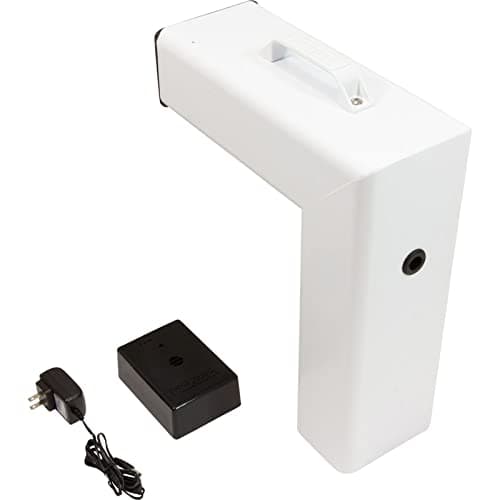 Poolguard PGRM-2 In-Ground Pool Alarm Certified by NSF to ASTM F2208, tuned to trigger on an entry the size of a one-year-old, 85 dB at ten feet and a receiver that carries 200 feet into the house. Always armed once it is in the water. | Best overall: the one certified to the pool-alarm standard | 9.7 / 10 | $201.50Amazon |
| 02 | 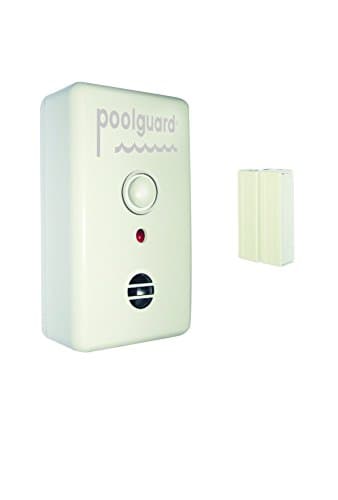 Poolguard DAPT-2 Door Alarm UL 2017 listed, horn at seven seconds unless an adult presses the bypass. Most drownings start with a door nobody heard open, which is why this is often the better first purchase than an in-water alarm. | Buy this first if the pool is reached through a door | 9.7 / 10 | $53.10Amazon |
| 03 | 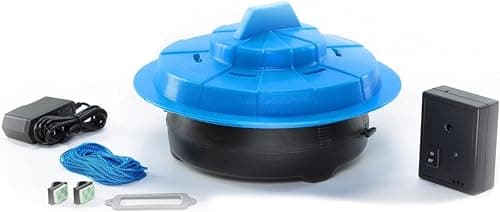 Pool Patrol PA-30 Pool Alarm Wave-sensing, stated to meet ASTM F2208, triggers on anything over 15 lb, with a sensitivity dial so wind does not train you to ignore it. No damage to the pool structure. | Best for an above-ground pool you cannot fence | 9.2 / 10 | $219.99Amazon |
| 04 | 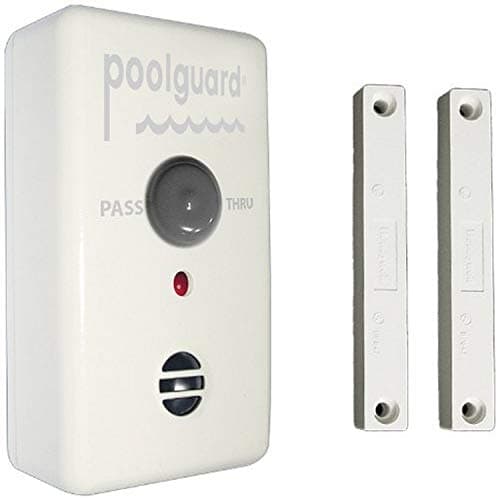 Poolguard GAPT-2 Gate Alarm Meets UL 2017 and tells you the gate just opened, seven seconds later. It is a useful addition to a fence and a poor substitute for one, because it watches a hinge rather than the water. | Only if the gate is the route in | 9.0 / 10 | $58.95Amazon |
#ad · Prices come live from Amazon, last checked November 4, 2026. Scores are ours, on our published 8.4-9.8 recommendation scale, compiled from standards statements, manuals and specs. Nothing below 8.4 is listed. Tap a row for the full write-up.
Where an alarm sits in the layers
The CPSC's Pool Safely guidance is built on layers of protection, and the order matters more than the products: a barrier the child cannot pass, then an alarm that reports a breach, then supervision that never stops. An alarm is the second layer. It does nothing to stop a fall and everything to shorten the gap between the fall and an adult reaching the water, and that gap is what decides whether a submersion becomes a drowning.
That is also why the ranking here is not in the order most people expect. Buying an in-water alarm instead of a fence is the one mistake this category invites, and it is a bad trade: the water alarm sounds once the child is already in. If you have no barrier yet, read best removable pool fences first, and use this page for the layer you add after it. The full three-way comparison is on pool fence vs pool alarm vs safety net.
The two standards, and which is which
Alarms in this category state one of two different things, and the listings rarely explain the difference.
ASTM F2208 is the pool alarm standard. It covers alarms that detect entry into the water, and it includes a performance requirement based on a test object roughly the size of a small child, which is the part that stops a product being tuned so loose that a leaf sets it off and so tight that a toddler does not. The PGRM-2 is certified to it by NSF, a third party; the Pool Patrol PA-30 states that it meets the requirements, which is the manufacturer's own claim. Both statements are real, and they are not the same statement.
UL 2017 is a general signalling-device listing, and it is what the door and gate alarms hold. It says the horn, the circuit and the delay behave as specified. It says nothing about detecting a child in water, because a door alarm does not try to. When a gate alarm carries no F2208 claim, that is not a gap in the product; it is the correct standard for what it does.
How we ranked these
Standards carry 35 percent on this page, the heaviest weighting anywhere on the site, because an alarm is a promise about detection and a third-party certificate is the only evidence of that promise you can check from your laptop. Installation truth and toddler resistance take 20 each; value takes 10, and deliberately so, since the cheapest alarm that does not sound is worth nothing.
One per-page override is in play and we will name it: the DAPT-2 door alarm has its standards score cut here, not because UL 2017 is weak, but because this is a pool-alarm page and the DAPT-2 does not claim the pool-alarm standard. It is still the alarm we would buy first in most houses. The rubric and the weights are on how we choose.
The two in-water alarms side by side
| Spec | Poolguard PGRM-2 In-Ground Pool Alarm | Pool Patrol PA-30 Pool Alarm |
|---|---|---|
| Certification | Certified by NSF International to the ASTM Safety Specification F2208 | Meets ASTM Safety Specification F2208, per the listing |
| Detection | Designed to detect intrusions similar to a one-year-old child | Water-movement detection; triggers on objects 15 lb and above, with adjustable sensitivity |
| Pool size | Up to 20 ft x 40 ft or 800 sq ft | Not published |
| Battery | 9-volt (not included), about 1 year life | One 9-volt battery (not included) |
| Price | 3 years; MSRP $299.95 | Not published |
The PGRM-2 carries third-party certification and covers a pool up to 20 by 40 feet with a receiver inside the house. The PA-30 is cheaper, adjustable, and installs without touching the pool structure, which makes it the practical answer for an above-ground pool with no deck to mount to. It also publishes two exclusions that rule it out of some yards entirely: it may not work with a fountain or waterfall running, and it is not recommended for saltwater pools. Read those two lines before you decide on price.
False alarms are the real failure mode
No alarm on this page fails by going silent. They fail by going off for nothing, over and over, in wind and rain and when the dog drinks from the pool, until somebody takes the battery out and the family has a dead alarm and a false sense of a live one. Everything about choosing and siting an alarm should be read with that in mind.
Practically, that means three things. Buy the detection threshold rather than the price, which is the argument for a product that states a test-object size. Use the sensitivity dial on a wave sensor rather than leaving it at the factory setting. And if your pool has moving water, accept that a surface-wave alarm is the wrong technology for your yard and put the money into the fence and the door instead.
The 9-volt battery problem
Every alarm here runs on a 9-volt battery, most of them do not include one, and every maker quotes roughly a year of life. That is the weakest point in the whole system, and it is on you rather than the product. Pick a date you will remember - the start of pool season is the obvious one - put it in a calendar with a repeat, and change every battery on that day whether or not the low-battery chirp has started. Then test the horn, from the far end of the house where you actually are.
Do the same walk-through for the rest of the yard while you are at it: the gate latch, the ladder, the pool cover and the chemicals in the shed. The order of work for a whole yard is on how to childproof a pool, and the gate hardware that keeps the fence honest is on best pool fences with gates.
In detail
Every pick, in full
01
Best overall: the one certified to the pool-alarm standard
Poolguard PGRM-2 In-Ground Pool Alarm
Our score
9.7 / 10Prevents
Certified by NSF to ASTM F2208, tuned to trigger on an entry the size of a one-year-old, 85 dB at ten feet and a receiver that carries 200 feet into the house. Always armed once it is in the water.
- Standards status
- Certified by NSF International to ASTM F2208, as stated by Poolguard
- Installation truth
- It is always armed once it is in the pool and cannot be casually switched off, which is the point. It covers pools to 20 by 40 feet, runs on a 9-volt battery for about a year, and it alarms after the child is in the water; it is a last layer, not a barrier.
Published specs (tap for source)
Rubric sub-scores (0-10) and this page's weights
- Standards & certification (35%)
- 10
- Installation truth (20%)
- 8
- Toddler resistance (20%)
- 7
- Adult one-hand use (10%)
- 7
- Damage & reversibility (5%)
- 8
- Value (10%)
- 5
What it gets right
- ASTM F2208 certification stated
- Always armed
- Remote receiver
- Three-year warranty
What it doesn't
- Alarms after entry
- One 9 V battery is the whole system
- Not for above-ground pools (SB2 is)
Skip it if…
…you are choosing between this and a fence; the fence stops the fall, the alarm reports it.
#ad · Price as of November 4, 2026 · Affiliate disclosure for the link to Poolguard PGRM-2 In-Ground Pool Alarm
02
Buy this first if the pool is reached through a door
Poolguard DAPT-2 Door Alarm
Our score
9.7 / 10Prevents
UL 2017 listed, horn at seven seconds unless an adult presses the bypass. Most drownings start with a door nobody heard open, which is why this is often the better first purchase than an in-water alarm.
- Standards status
- UL listed under UL 2017, as stated by Poolguard
- Installation truth
- The seven-second delay is for adults with the bypass button; a toddler does not know the button, and by second eight the horn is going. Mount the button out of reach.
Published specs (tap for source)
Rubric sub-scores (0-10) and this page's weights
- Standards & certification (35%)
- 7
- Installation truth (20%)
- 8
- Toddler resistance (20%)
- 8
- Adult one-hand use (10%)
- 8
- Damage & reversibility (5%)
- 7
- Value (10%)
- 8
What it gets right
- UL 2017 stated
- Loud
- Cheap layer for the door that leads to water
What it doesn't
- Battery is the whole system
- Bypass button must be mounted high
- One door per alarm
Skip it if…
…the door already has a keyed deadbolt at adult height that is always used; the alarm is for doors that get left unlocked.
#ad · Price as of November 4, 2026 · Affiliate disclosure for the link to Poolguard DAPT-2 Door Alarm
03
Best for an above-ground pool you cannot fence
Pool Patrol PA-30 Pool Alarm
Our score
9.2 / 10Prevents
Wave-sensing, stated to meet ASTM F2208, triggers on anything over 15 lb, with a sensitivity dial so wind does not train you to ignore it. No damage to the pool structure.
- Standards status
- Meets ASTM Safety Specification F2208 requirements, as stated on the listing
- Installation truth
- It installs with no damage to the pool structure, which is why it suits an above-ground pool with no deck to drill. Two exclusions are published and both matter: it may not work with an in-pool fountain or waterfall because moving water looks like an intrusion, and it is not recommended for saltwater pools. A 9-volt battery is not included, and a pool alarm with a dead battery is decoration, so put a date on the calendar.
Published specs (tap for source)
Rubric sub-scores (0-10) and this page's weights
- Standards & certification (35%)
- 8
- Installation truth (20%)
- 8
- Toddler resistance (20%)
- 4
- Adult one-hand use (10%)
- 7
- Damage & reversibility (5%)
- 9
- Value (10%)
- 6
What it gets right
- States ASTM F2208 and publishes the 15 lb trigger weight
- No drilling into a pool wall or deck
- Sensitivity dial, which is what stops false alarms becoming ignored alarms
- Scales to a bigger pool with a second unit
What it doesn't
- Reports a fall, it does not prevent one
- Battery not included
- Not for saltwater pools or pools with a waterfall
- Has to be re-armed after a swim
Skip it if…
…your pool is saltwater or has a running waterfall; the maker says the detection may not work.
#ad · Price as of November 4, 2026 · Affiliate disclosure for the link to Pool Patrol PA-30 Pool Alarm
04
Only if the gate is the route in
Poolguard GAPT-2 Gate Alarm
Our score
9.0 / 10Prevents
Meets UL 2017 and tells you the gate just opened, seven seconds later. It is a useful addition to a fence and a poor substitute for one, because it watches a hinge rather than the water.
- Standards status
- Meets UL 2017, as stated by Poolguard; no ASTM F2208 claim (that standard covers pool alarms, not gate alarms)
- Installation truth
- It watches the gate, not the water, so it is only useful if there is a gate and that gate is the route in. Mount the reset high and out of reach, or it becomes a toy; and a seven-second delay exists so adults can pass through, which also means seven seconds of silence after a child does.
Published specs (tap for source)
Rubric sub-scores (0-10) and this page's weights
- Standards & certification (35%)
- 6
- Installation truth (20%)
- 8
- Toddler resistance (20%)
- 4
- Adult one-hand use (10%)
- 7
- Damage & reversibility (5%)
- 9
- Value (10%)
- 7
What it gets right
- Cheap for a certified alarm
- Names UL 2017
- Nothing to remember once it is fitted
What it doesn't
- Only one-year warranty
- Useless if the way in is over the fence rather than through the gate
- Battery not included
Skip it if…
…your above-ground pool has no gate; the entry point is the ladder, and a ladder barrier is the product for that.
#ad · Price as of November 4, 2026 · Affiliate disclosure for the link to Poolguard GAPT-2 Gate Alarm
How many alarms, and where
A house that opens onto a pool wants one door alarm on every door a child can reach, which is usually two: the patio slider and the laundry or garage door. Add one in-water alarm. A yard with a fenced pool and no direct door wants a gate alarm plus the in-water alarm. Buying two in-water alarms for one pool is rarely the answer; covering the second door is.
Mount the bypass button high
Every door and gate alarm here has a bypass so adults can pass without the horn. That button is the whole system's weak point: at toddler height it is a toy, and within a week it is the reason the alarm never sounds. Mount the unit at the top of the door, not the middle, and brief anyone who stays in the house on how it works before they trip it once and start propping the door.
Who should skip these
How we chose
How these picks were chosen
Every product currently sold for this job was read and compared, then scored against the exact problem this page is about: the manufacturer's published specs, the opening and fit charts, the safety standard it states, the install conditions in the manual, the warranty terms and the cited research. The sources are listed at the bottom of the page.
Scores come from that published data on a rubric you can read, a missing spec is scored neutral rather than guessed, and nobody pays for placement. The full rubric is on How We Choose.
- Standards & certification
- 35%
- Installation truth
- 20%
- Toddler resistance
- 20%
- Adult one-hand use
- 10%
- Damage & reversibility
- 5%
- Value
- 10%
The weights that ordered this page. Each product's score is published on our 8.4-9.8 recommendation scale and is the same wherever it appears.
FAQ
Questions people ask
Do pool alarms actually work?
Is a door alarm or a pool alarm better?
Will a pool alarm go off when it rains?
Do pool alarms work on above-ground pools?
Does a pool alarm satisfy a local pool code?
Keep going
Related guides and picks
- Pool fence vs pool alarm vs safety netThe layer-by-layer comparison this page sits inside.
- Best removable pool fencesThe barrier to buy before any alarm.
- How to childproof a poolThe whole-yard order of work, gate latch to chemicals.
- Best pool fences with gatesThe self-closing, self-latching hardware a gate alarm backs up.
Update log
What changed
- First published.
Receipts
Sources
- 01CPSC news release, 2026: report highlights persistent risk of childhood drowning (accessed Sep 21, 2026)
- 02CPSC Pool Safely campaign (accessed Sep 21, 2026)
- 03CPSC publication: Childproofing Your Home, 12 Safety Devices to Protect Your Children (accessed Sep 21, 2026)
Specs, standards statements and install requirements come from the manufacturer's own pages and manuals (or a named retailer's listing where the brand doesn't publish them); injury data and standards come from the CPSC, ASTM, NEC via ESFI and the AAP, linked above. Prices are set by Amazon and change often, so the buy button always takes you to the live listing. Read the full method.