05 Windows, Doors, Fireplace & Edges Guide
How to babyproof a fireplace: the hearth edge, the fire, and the glass you didn't think about
A fireplace is two hazards in one spot: a stone edge at forehead height all year, and a heat source for a few months. Brick, ledge, gas insert or wood stove, the fix has the same three parts.
- By
- Mike M.
- Updated
- Method
- How we choose
We earn a commission if you buy through our links, at no extra cost to you. It never decides the ranking: the method is published. Affiliate disclosure
Two hazards, three parts
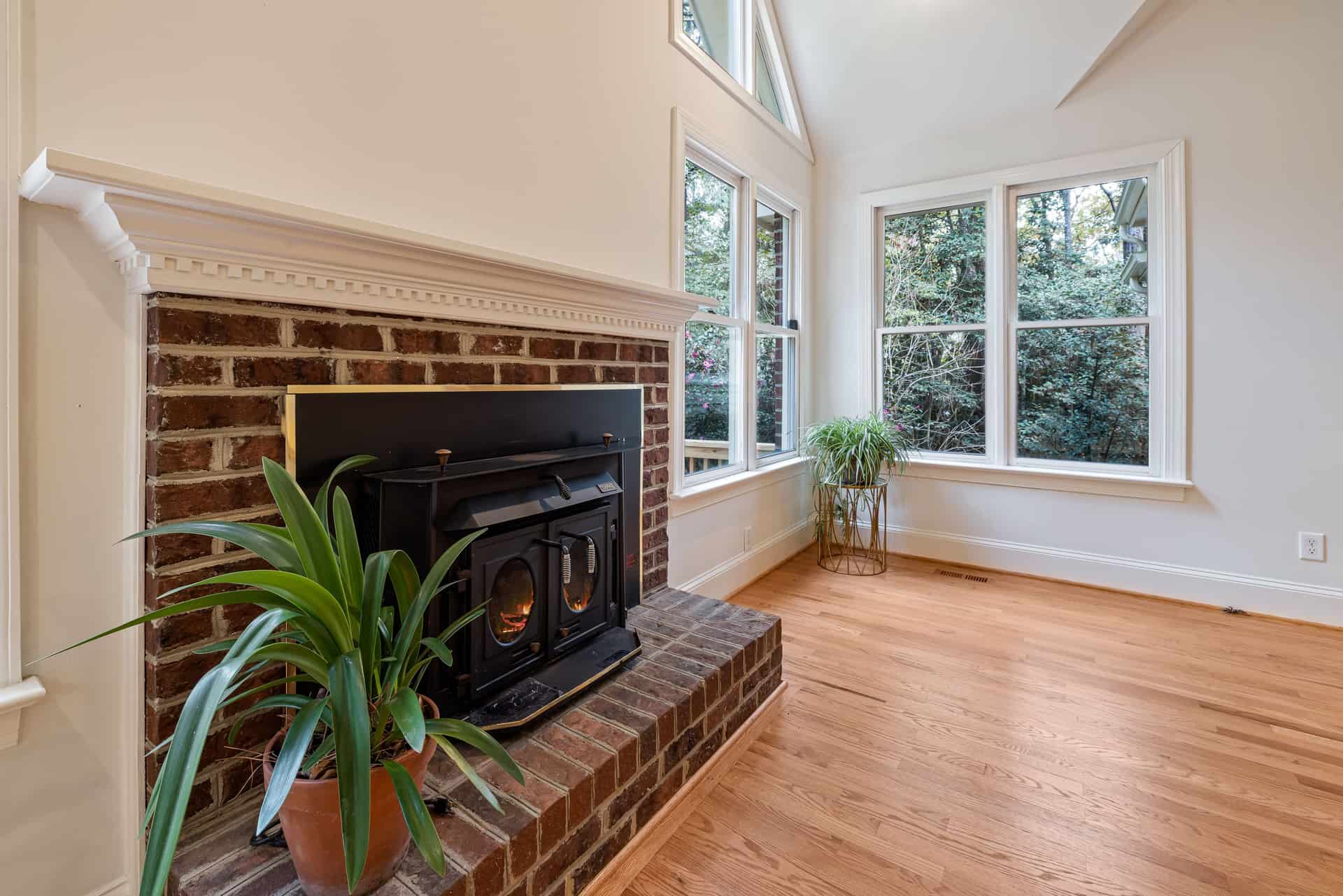
The hearth is a raised stone or brick shelf with a square edge at exactly the height a cruising toddler falls from. That hazard is there in July. The fire is a burn hazard for the months the fireplace is lit, and with a gas unit the glass front is the burn hazard even when the fire is not visible. So the plan has three parts: a cushion on the edge always, a barrier around the whole thing in season, and a rule about the glass. Nothing here replaces an adult in the room with a lit fire; the barrier buys you the thirty seconds you are not looking.
Part 1: the hearth edge, all year
A hearth cushion is a length of dense foam, L-shaped or flat, stuck along the front edge and wrapped around the corners. KidKusion makes one specifically for hearths, 8.33 feet in a pack, attached with adhesive- backed hook-and-loop, made in the USA. Roving Cove's HeftyFit edge and corner set is denser foam (a stated Shore A 20) in a 15-foot roll with pre-taped corners, and it publishes its flame-resistance testing, which matters on a hearth. Either way the surface is the problem: stone and brick are rough and dusty, so clean the edge, press hard, and expect to re-stick a corner after the first winter of heat. The full ranking is best hearth pads and edge guards. Foam near a fire is fine when the fire is behind a gate; foam is not a gate.
Part 2: the gate, in season
A fireplace gate is a run of steel panels, hardware-mounted to the wall on each side of the fireplace, standing off the hearth far enough that a child at the gate cannot reach heat. Two rules from the makers. North States requires a minimum 2-foot distance between its 3-in-1 Superyard and a fireplace. KidCo's purpose-built HearthGate wraps a standard 6-foot hearth with a door you can move to any section, but its page gives no clearance figure, so use your fireplace or stove manual's clearance-to-combustibles number as the minimum standoff. Both are hardware installs at the wall; a freestanding run of panels around a fire is a suggestion. The gates are ranked in best fireplace baby gates; the multi-panel install is the same as any wide gate, in how to install a baby gate.
Part 3: gas fireplaces and the glass
A sealed gas fireplace or insert has a glass front that gets hot enough to burn skin on contact while the fire is running and for a long time afterward, and it does not look dangerous once the flame is off. The CPSC's own guidance says the glass fronts can reach 500 or even 1,000 degrees F and that severe burns happen in seconds, and it notes that starting January 1, 2015 all new gas fireplaces that vent outside come with a protective barrier; for older units it recommends buying a retrofit barrier, such as an attachable safety screen or a fireplace safety gate. The rule for a home with a toddler: the gate goes up before the fire is lit and stays up until the glass is cool to the back of your hand, which can be an hour. A screen over the glass reduces the contact temperature; it does not make the glass touchable.
Brick, ledge, insert, stove
Brick fireplace with a raised hearth: cushion the edge and corners, gate in season. Flush hearth, no ledge: no edge to pad; gate in season, and corner guards on the mantel corners if they are at head height. Gas insert in a wall: the glass rule above; a gate with a door, because you will be opening it to light the pilot. Wood stove: the hottest surface in the house, on all sides; a full wrap of panels at the stove manual's clearance, which KidCo says its HearthGate can do with extra sections. The rest of the room, including the TV over the mantel, is in babyproofing the living room.
The picks
How we chose
Units we claim to have tested: 0
Everyone in this category says they tested it. We didn't, and we say so. Every pick is scored from the brand's published specs, width and size charts, warranty terms and cited research, against the problem this page is about. The sources are listed at the bottom of the page.
Scores are editorial judgments from that published data, not lab results. Nobody pays for placement, and a missing spec is scored neutral, never guessed. The full rubric is on How We Choose.
- Standards & certification
- 30%
- Installation truth
- 30%
- Toddler resistance
- 20%
- Adult one-hand use
- 5%
- Damage & reversibility
- 5%
- Value
- 10%
The weights this page used for its scores.
FAQ
Questions people ask
Can you have an open gas fireplace with a baby?
How do you babyproof a brick fireplace hearth?
How far should a fireplace gate be from the fireplace?
Keep going
Related guides and picks
Update log
What changed
- First published.
Receipts
Sources
- 01CPSC OnSafety blog, Dec 19, 2014: Protect young children from burns on glass fronts of gas fireplaces (accessed Sep 21, 2026)
- 02CPSC publication: Childproofing Your Home, 12 Safety Devices to Protect Your Children (accessed Sep 21, 2026)
- 03Children's Hospital Colorado: Home baby proofing room by room (accessed Sep 21, 2026)
- 04CPSC: Business guidance for gates and enclosures, 16 CFR part 1239 / ASTM F1004 (accessed Sep 21, 2026)
We don't lab-test gates, locks or anchors, and we don't pretend to. Specs, standards statements and install requirements come from the manufacturer's own pages and manuals (or a named retailer's listing where the brand doesn't publish them); injury data and standards come from the CPSC, ASTM, NEC via ESFI and the AAP, linked above. Prices are set by Amazon and change often, so we don't print them. Where a figure isn't published, we say so. Read the full method.