03 Furniture Anchors & Tip-Over Guide
The STURDY Act explained: new dressers have to pass a stability test, and three kinds of furniture in your house still do not
A federal rule now governs how stable a clothing storage unit has to be before it can be sold. It is a real improvement, it applies to almost nothing you already own, and it does not replace the strap.
- By
- Mike M.
- Updated
- Method
- How we choose
We earn a commission if you buy through our links, at no extra cost to you. It never decides the ranking: the method is published. Affiliate disclosure
What the rule actually is
Two things with similar names get muddled here, so it is worth separating them.
STURDY is the statute - the Stop Tip-overs of Unstable, Risky Dressers on Youth Act. It did not itself specify a test. It directed the Consumer Product Safety Commission to put a mandatory stability standard in place for clothing storage units, with requirements about how realistic the testing had to be.
ASTM F2057-23 is the standard the Commission adopted in 2023 to satisfy it. That is the document a manufacturer actually tests against, and since adoption it has the force of a federal consumer product safety rule rather than being voluntary.
The practical content is stability: a covered unit has to stay upright under test conditions meant to represent how furniture is used and misused in a home rather than how it sits in a showroom. Before the rule, the voluntary standard was easier to pass, and some units that met it tipped under the load of a climbing toddler. That is the gap the rule closes, and it is why a new dresser is a better starting point than a second-hand one, which is not a sentence we get to write often on this site.
The reason any of this exists is in the CPSC's own reporting. Tip-overs are the one babyproofing hazard with a federal body count attached to it, and the numbers are on do you really need to anchor furniture.
What counts as a clothing storage unit
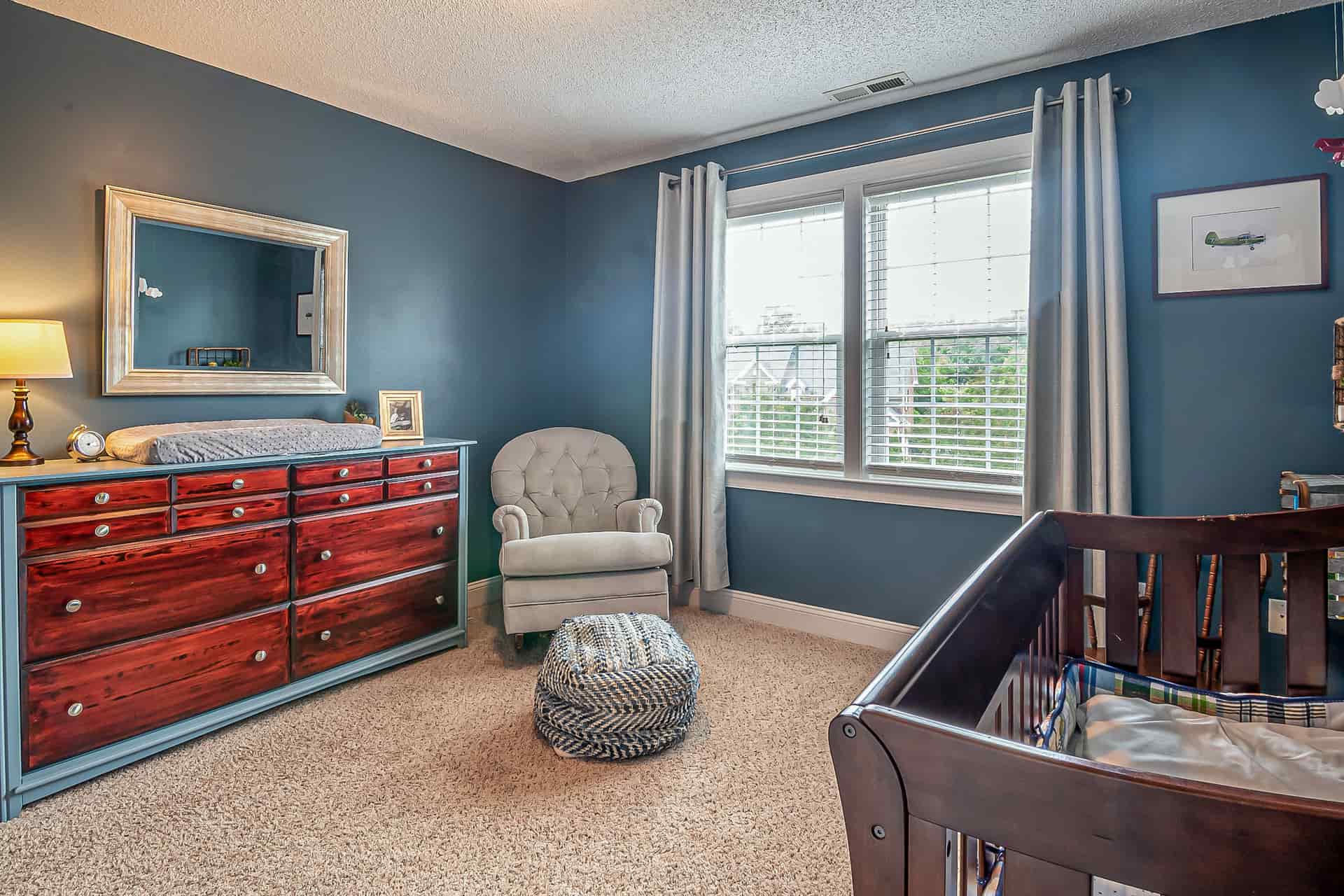
A clothing storage unit is, roughly, furniture intended for storing clothes: dressers, chests of drawers, bureaus, armoires, chifforobes and similar pieces above a defined height. That is the category the rule names, and it is deliberately broad within its own boundary - a four-drawer chest in a child's room and a tall armoire in a guest bedroom are both in scope.
If you are shopping, the covered pieces are the ones where you can now treat the sold-in-the-US status as meaningful evidence of stability. Ask the retailer whether the unit complies with the mandatory standard; a current manufacturer will have an answer, because they cannot legally sell it otherwise.
The three gaps
One: furniture that is not for clothes. Bookcases, shelving units, media consoles, TV stands, sideboards, filing cabinets and storage cubes are outside the definition. A tall bookcase is one of the most climbable objects in a house and is covered by nothing mandatory, which is why how to anchor a bookshelf is a separate job rather than a footnote.
Two: everything already in your house. The rule governs what can be sold, not what you own. The dresser you inherited, the one from the previous apartment, the flat-pack unit bought in 2019 - none of them were tested to this standard and none of them became safer in 2023.
Three: televisions. The CPSC's tip-over reporting repeatedly identifies televisions as a major part of the hazard, frequently a television on top of furniture that was never designed to hold it. No dresser standard addresses that. The TV is its own job, on how to anchor a TV and best TV anti-tip straps.
What it changes when you buy a dresser
Three practical things.
New beats second-hand, for once. If you are choosing between a new compliant dresser and a used one of unknown vintage for a child's room, the new one has cleared a bar the old one never had to. That is a real argument, and it is the opposite of the advice we would give on most baby equipment.
The restraint in the bag is part of the product. Covered units ship with a tip restraint and instructions. That kit is not an upsell or a packaging extra: it is what the manufacturer has determined the unit needs. Fit it, and if the kit is missing from a flat-pack box, ask for it rather than shrugging.
Compliance is not a license to skip the wall. The standard is about how the unit behaves on its own. It does not model your three-year-old opening every drawer and standing on the bottom one while pulling on the top, on carpet, next to a radiator. The CPSC's own guidance after adopting the rule still says to anchor.
The anchor is still part of the job
What to do about the furniture you already own
Walk the house once with this test: is the piece taller than about two feet, does it have drawers or shelves a child can stand on, and is there anything on top worth climbing for? Every yes gets a strap, and the order is by bedroom first because that is where children are unsupervised for the longest stretches.
The CPSC's Anchor It! campaign exists precisely because the mandatory standard cannot reach the furniture already in homes, and the fix is the same two screws it has always been. If you rent, the argument for those two holes is on anchoring furniture in a rental; if your walls are plaster or brick, the fixings change and furniture anchors for drywall, plaster and brick covers it. The full list of what to anchor is on what furniture needs to be anchored, and the ranked kits are on best furniture anchors.
How we chose
How these picks were chosen
Every product currently sold for this job was read and compared, then scored against the exact problem this page is about: the manufacturer's published specs, the opening and fit charts, the safety standard it states, the install conditions in the manual, the warranty terms and the cited research. The sources are listed at the bottom of the page.
Scores come from that published data on a rubric you can read, a missing spec is scored neutral rather than guessed, and nobody pays for placement. The full rubric is on How We Choose.
- Standards & certification
- 30%
- Installation truth
- 30%
- Toddler resistance
- 20%
- Adult one-hand use
- 5%
- Damage & reversibility
- 5%
- Value
- 10%
The weights that ordered this page. Each product's score is published on our 8.4-9.8 recommendation scale and is the same wherever it appears.
FAQ
Questions people ask
What is the STURDY Act?
Does the STURDY Act cover bookcases and TV stands?
Does a STURDY-compliant dresser still need to be anchored?
Does the rule apply to furniture I already own?
How do I know if a dresser I am buying complies?
Keep going
Related guides and picks
Update log
What changed
- First published.
Receipts
Sources
- 01CPSC news release, 2023: CPSC adopts ASTM F2057-23 (STURDY) as a mandatory standard for clothing storage units (accessed Sep 21, 2026)
- 02CPSC: 2023 Annual Tip-Over Report, PDF (accessed Sep 21, 2026)
- 03CPSC news release, Feb 8, 2024: TV and furniture tip-over fatalities and injuries (accessed Sep 21, 2026)
- 04CPSC Anchor It! campaign (accessed Sep 21, 2026)
Specs, standards statements and install requirements come from the manufacturer's own pages and manuals (or a named retailer's listing where the brand doesn't publish them); injury data and standards come from the CPSC, ASTM, NEC via ESFI and the AAP, linked above. Prices are set by Amazon and change often, so the buy button always takes you to the live listing. Read the full method.