04 Outlet Covers, Cords & Blinds Best picks
Best power strip covers: a four-product category, and only one of them locks
A power strip is the one thing in a childproofed room that is still six unshuttered outlets at floor height. Fewer companies make a cover for it than you would expect, and the differences between them are larger than the price gap suggests.
- By
- Mike M.
- Updated
- Method
- How we choose
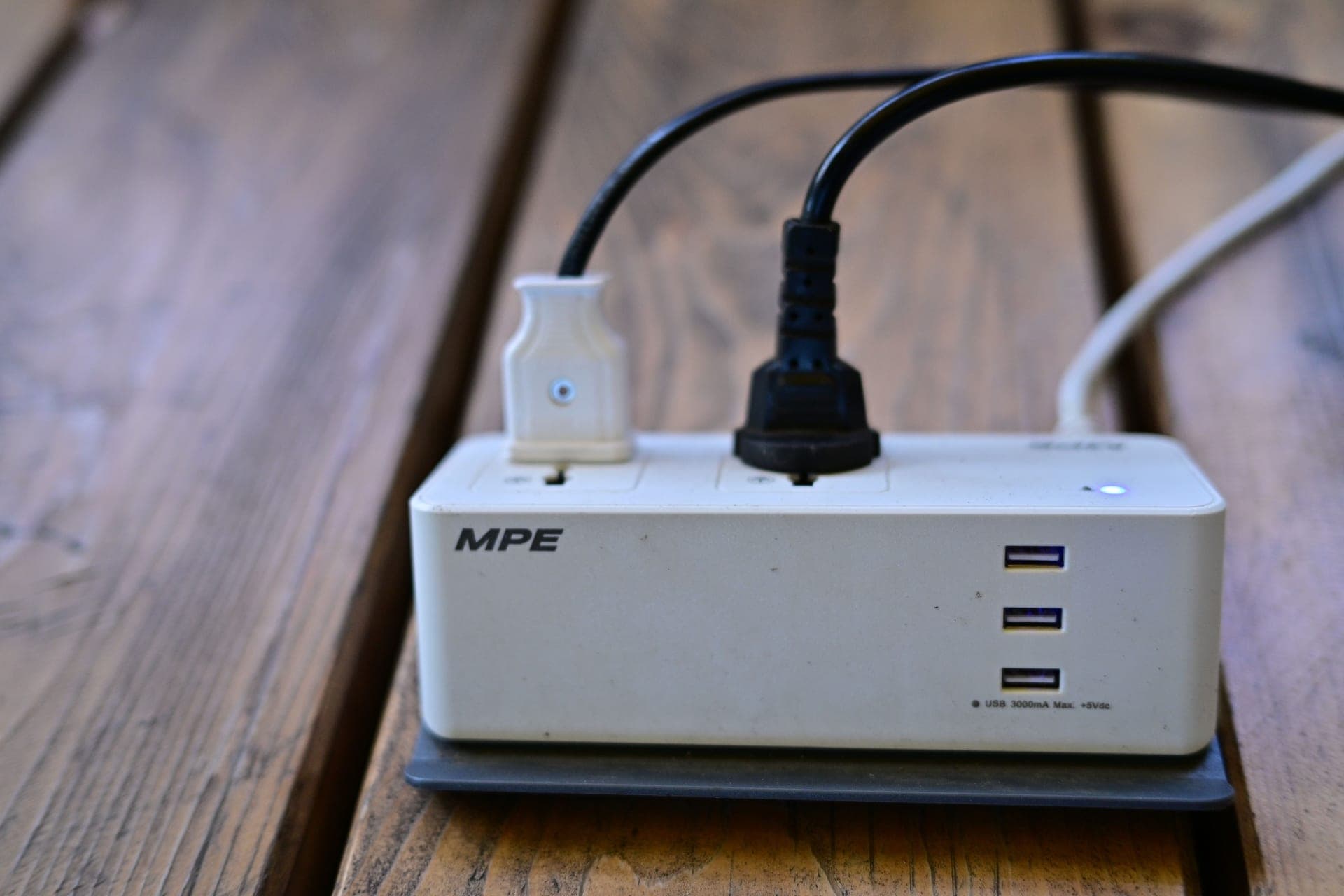
We earn a commission if you buy through our links, at no extra cost to you. It never decides the ranking: the method is published. Affiliate disclosure
Quick picks
The short answer
| # | Product | Best for | Score | Price |
|---|---|---|---|---|
| 01 | 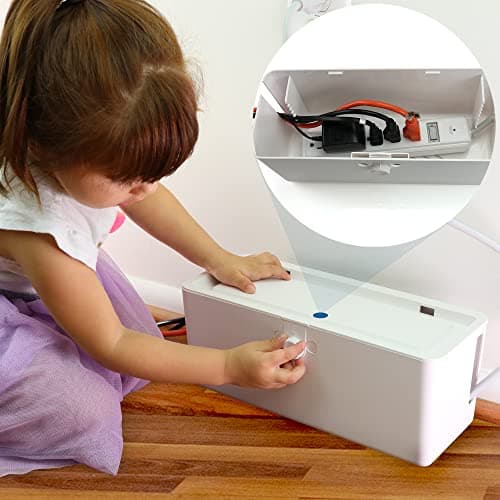 Wappa Baby Power Strip Cover Box (13 in) A 13.3-inch lidded box with a double-lock catch, side cord ports and a shelf-mount option. It is the only product in this roundup whose maker claims a locking mechanism at all, and that is the whole reason it wins. The trade is length: 11 inches of strip, no more. | Best overall: the only one with a lock | 9.0 / 10 | $19.99Amazon |
| 02 | 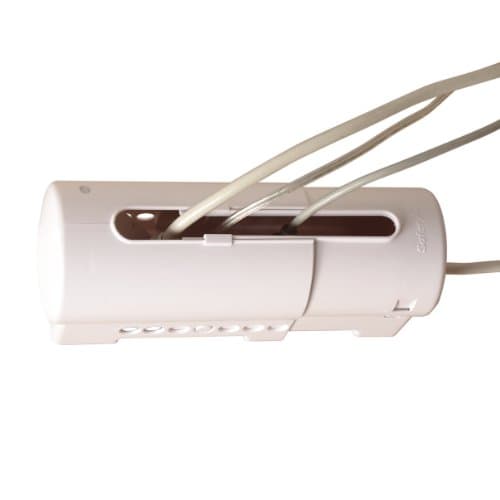 Safety 1st Power Strip Cover (SKU 104090602) An expandable two-piece shell that slides out to take a strip up to 13.5 inches, which is longer than anything else here manages, at roughly half the price of the locking box. No latch, so it is a crawler barrier rather than a toddler barrier. | Best for a long strip on a small budget | 9.0 / 10 | $11.99Amazon |
| 03 | 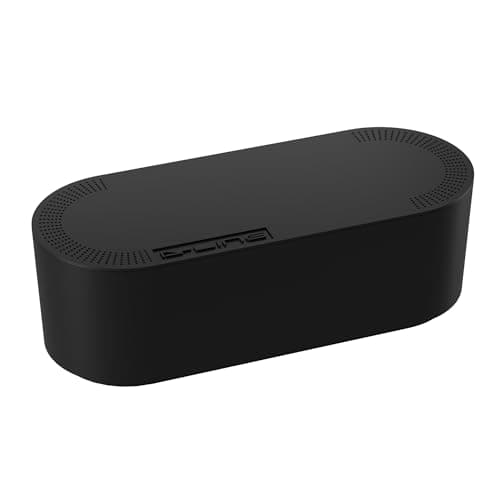 D-Line Cable Management Box, Large Not a child-safety product, and D-Line does not pretend otherwise - but at 16.5 inches long and 5.25 tall it is the only box here that swallows a surge strip with wall-wart bricks hanging off it, and its own page names infants and pets as the reason the lid exists. | Best for a strip full of chunky adapters | 9.0 / 10 | $27.99Amazon |
| 04 | 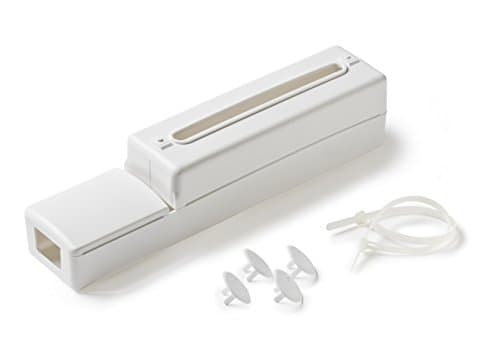 Mommy's Helper Power Strip Safety Cover with Cord Ties The only cover that comes with plug inserts for the unused outlets and ties for the cords. It also deliberately leaves the on/off switch reachable, and it publishes no dimensions, which between them are why it ranks last. | Best if half the outlets are empty | 8.8 / 10 | $14.45Amazon |
#ad · Prices come live from Amazon, last checked November 4, 2026. Scores are ours, on our published 8.4-9.8 recommendation scale, compiled from standards statements, manuals and specs. Nothing below 8.4 is listed. Tap a row for the full write-up.
Why this category is four products deep
There are sixty-odd cabinet latches on sale in the United States and something like a dozen credible baby gates. There are four power strip covers. We went looking for more than that, twice, and the extra listings are either unbranded two-packs with no maker behind them or cable tidies with "child proof" typed into the title by a seller rather than claimed by a manufacturer. If a product's own maker will not publish what it fits, it does not go on this page.
That thinness is worth understanding, because it explains the products. A wall outlet is regulated: the National Electrical Code has required tamper-resistant receptacles in new residential construction since its 2008 edition, and the shutters behind the face of a modern outlet only retract when both blades of a plug push in together. That requirement attaches to the receptacles installed in the building. The power strip you plug into one is an appliance you bought, and an ordinary strip is a row of plain unshuttered outlets unless its own listing says otherwise - which almost none do.
So the hazard is real and the market for it is small, and the reason is probably that most parents never think of the strip as an outlet at all. It is behind the sofa, it belongs to the television, and it does not look like the thing on the wall that got the plastic plug. Meanwhile it is at the exact height of a crawling baby, it is in the middle of the floor rather than against a wall, and it has a glowing switch on the end of it.
The practical consequence for this page: do not expect a certified product, because there is not one. Every cover here states no safety standard. Judge them on the lid, the length and the plugs, which is what the ranking below does.
How we ranked these
We do not test products. Every number on this page comes from a manufacturer or named retailer listing, linked on the spec table of each pick, and the scores are editorial judgments compiled from that published data - the method is on how we choose.
For this category we weighted toddler resistance at 30 percent, which is higher than our default, because the failure mode here is not a product that breaks. It is a lid that comes off. Installation truth takes 20 percent and is mostly about published fit: a box whose maker tells you the maximum strip length is a box you can buy without gambling. Value takes 15 percent, one-hand adult use 15, damage and reversibility 10 (nothing here drills anything, so the spread is small) and standards 10, because every single pick scores the same near-zero there and a metric nobody can win on should not decide the ranking.
One score is overridden on this page. The D-Line box is a cable tidy that happens to be good at this job, and its toddler resistance is marked down here relative to our general cord-cover ranking, because a lid with no catch is a different proposition in a room with a one-year-old in it than it is under a desk.
The lid is the whole product
Strip the marketing off these four and you are choosing between three lid mechanisms.
A latched lid. Only the Wappa box has one, and its maker calls it a double lock: two catches that have to be released before the lid lifts. This is the same logic as an in-use outlet box on the wall, and it is the only mechanism here that asks a child to do two things at once. If your child is past the stage of simply not noticing objects - if they have started opening cabinets, pulling plug inserts, climbing - this is the only pick on the page that is really aimed at them.
A friction shell. The Safety 1st cover and the Mommy's Helper cover both close because the two halves grip each other, not because anything latches. For a baby who is crawling and exploring by mouth and hand, a shell that needs a deliberate pull to separate is a genuine barrier. For a determined toddler it is a puzzle with one step in it. The honest way to think about these two is as the cheap, good-enough option for the under-one stage, with an upgrade later if your child turns out to be the kind who works at things.
A resting lid. The D-Line box lid sits on the box. Nothing holds it down. D-Line is straightforward about what the product is - its own page says it makes electrics less accessible to curious pets and infants, which is accurate and is not the same claim as childproof - and we have ranked it here because it is the only thing in the category that physically fits a big surge strip. Buy it for the fit, not for the lid, and know what you are buying.
There is a fourth mechanism worth naming because it is the one people assume exists and does not: a keyed or combination lock. Nothing in this category has one. If you need the strip genuinely secured rather than covered - a medically fragile child, a child who is older and specifically targets it - the honest answer is to move the strip out of the room entirely rather than to buy a better box.
The three measurements that decide it
Returns in this category are almost always about fit, and almost always about one of three numbers. Take them off your own strip before you order. A full walk-through of the job, including what to do with the slack cord afterwards, is on how to babyproof a power strip.
Body length, excluding the cord. The Wappa box states strips up to 11 inches. The Safety 1st shell expands to 13.5. The D-Line Large is 16.5 inches long on the outside, though D-Line publishes no internal dimension, which is a real gap in its listing. A plain six-outlet strip is usually comfortably under 11 inches; a ten or twelve-outlet surge protector is usually over 13.
Height with the plugs in. This is the measurement people forget. The thing that has to fit inside the box is not the strip, it is the strip plus everything plugged into it. A row of ordinary two-prong plugs adds about an inch. A phone charger adds two. A vertical transformer brick standing up out of the strip adds three or four and will stop every lid on this page from closing except the D-Line, which is 5.25 inches tall.
Cord exit width. Count how many cords leave the strip and look at where the box lets them out. The Wappa and the D-Line both have purpose-cut openings; the Safety 1st and the Mommy's Helper covers rely on gaps at the ends. Cords run out through a cut-out keep the lid seated. Cords run over the rim hold the lid open a quarter inch, which is enough for small fingers and is the single most common way one of these fails in a real living room.
The switch problem
Every power strip has a rocker switch, most of them light up, and to a one-year-old a lit rocker switch is the most interesting object within reach. It is also, unlike the outlets, completely safe to press - the worst it does is turn the television off.
The covers split on this. The Wappa box and the D-Line box enclose the switch along with everything else. The Safety 1st cover encloses it. The Mommy's Helper cover deliberately does not: its listed features include convenient access to the on/off switch, which is a sensible choice for a classroom or a clinic, where the product is also sold, and exactly the wrong choice in a toddler's living room.
If the switch is the thing your child goes for, that one line in the feature list should decide your purchase on its own. If the switch is not the issue and the cords are, the Mommy's Helper kit is the only one of the four that ships with ties and labels for them.
Which one for which strip
A standard six-outlet strip behind the sofa, child under two. The Wappa box. It fits, it latches, the cords leave through the sides, and it is the only thing here that asks for two hands.
A long strip, or three strips and a limited budget. The Safety 1st cover, which expands to 13.5 inches and costs about half what the locking box does. Buy one per strip and accept that it is a friction fit.
A surge protector with bricks plugged into it. The D-Line Large. Nothing else closes over an adapter. If you would rather have the lock, the alternative is a short extension lead so the brick sits outside the box and only the strip goes in - that is often the cheaper fix.
A strip with three things plugged into it and three empty outlets. The Mommy's Helper kit, for the four plug inserts, or better: unplug the strip, use the wall outlet directly, and put the strip in a drawer. A strip you do not need is the one piece of babyproofing that costs nothing.
A wall outlet with something permanently plugged into it. Not this page. That is an in-use outlet box, and the ranking for those is on best outlet covers for plugs in use.
What does not work
Plug inserts in the strip. People buy a 50-pack of plug covers and fill the strip's empty outlets with them. It does something, but the inserts in a strip are looser than the ones in a wall because the strip's contacts are lighter, and they leave the plugs, the cords and the switch completely exposed. Why inserts are the weakest option generally is covered in plug inserts vs sliding outlet covers.
Taping the strip to the floor or the wall. It stops the strip moving and does nothing about the outlets, the plugs or the switch. It also makes the plugs harder to seat properly, which is the one genuinely live exposure on a strip: a plug that is not pushed all the way home leaves metal showing.
Hiding it behind furniture. A crawling baby finds the gap behind the sofa within a week of learning to crawl, and the strip is now somewhere you cannot see it. Boxed and visible beats hidden and open.
Buying a box and ignoring the cord. Every one of these products addresses the strip and none of them addresses the loop of slack lead running to the wall, which is a pull hazard for a lamp and a loop hazard for a neck. Wind it up. The cord half of the job is on how to babyproof cords, and the roundup of covers for the runs themselves is best cord covers for babyproofing.
In detail
Every pick, in full
01
Best overall: the only one with a lock
Wappa Baby Power Strip Cover Box (13 in)
Our score
9.0 / 10Prevents
A 13.3-inch lidded box with a double-lock catch, side cord ports and a shelf-mount option. It is the only product in this roundup whose maker claims a locking mechanism at all, and that is the whole reason it wins. The trade is length: 11 inches of strip, no more.
- Standards status
- No standard stated on the Wappa Baby product page
- Installation truth
- It holds strips up to 11 in long and 2.75 in wide; measure yours, because the surge strips with big adapters and the ones with USB blocks often run longer.
Published specs (tap for source)
Rubric sub-scores (0-10) and this page's weights
- Standards & certification (10%)
- 3
- Installation truth (20%)
- 8
- Toddler resistance (30%)
- 8
- Adult one-hand use (15%)
- 8
- Damage & reversibility (10%)
- 9
- Value (15%)
- 8
What it gets right
- Double lock
- Cord ports both sides
- Shelf-mountable
What it doesn't
- Standard strips only
- Big box on the floor
- Cords still exit and can be pulled
Skip it if…
…your strip is longer than 11 in or has vertical adapters plugged in.
#ad · Price as of November 4, 2026 · Affiliate disclosure for the link to Wappa Baby Power Strip Cover Box (13 in)
02
Best for a long strip on a small budget
Safety 1st Power Strip Cover (SKU 104090602)
Our score
9.0 / 10Prevents
An expandable two-piece shell that slides out to take a strip up to 13.5 inches, which is longer than anything else here manages, at roughly half the price of the locking box. No latch, so it is a crawler barrier rather than a toddler barrier.
- Standards status
- No standard stated on the retailer listing consulted
- Installation truth
- It expands, which is the reason to buy it and also the thing to watch: the shell is listed at 10.5 by 5 by 4 inches and slides open to swallow a strip up to 13.5 inches, so a long surge strip that defeats a fixed 13-inch box still fits here. What the listing does not claim is a lock. It stays shut because it is a snug two-piece shell, not a latched lid, so treat it as a barrier to a crawler rather than to a determined two-year-old, and use the wall-mount option once your child starts lifting it.
Published specs (tap for source)
Rubric sub-scores (0-10) and this page's weights
- Standards & certification (10%)
- 3
- Installation truth (20%)
- 9
- Toddler resistance (30%)
- 6
- Adult one-hand use (15%)
- 8
- Damage & reversibility (10%)
- 9
- Value (15%)
- 9
What it gets right
- Expandable, so it takes the long strips that beat a fixed-length box
- Floor or wall mount, both stated by the maker
- Cheapest purpose-built strip cover from a brand with a warranty behind it
- Covers the switch as well as the outlets
What it doesn't
- No locking mechanism is claimed anywhere on the listing
- Thin polypropylene rather than the thicker ABS of the boxes above it
- Sold singly, so a house with three strips costs three times over
- No safety standard stated
Skip it if…
…your toddler already defeats friction-fit covers; a double-locking box is the harder target.
#ad · Price as of November 4, 2026 · Affiliate disclosure for the link to Safety 1st Power Strip Cover (SKU 104090602)
03
Best for a strip full of chunky adapters
D-Line Cable Management Box, Large
Our score
9.0 / 10Prevents
Not a child-safety product, and D-Line does not pretend otherwise - but at 16.5 inches long and 5.25 tall it is the only box here that swallows a surge strip with wall-wart bricks hanging off it, and its own page names infants and pets as the reason the lid exists.
- Standards status
- D-Line states the Cable Organizer Box is safety tested; no standard number is published
- Installation truth
- Three rear entry and exit points is the spec that matters: route every cord out of the back and the box sits flush to a wall with nothing loose at the front. The Large is 16.5 by 6.5 by 5.25 inches outside, so measure your strip first - a surge strip with vertical adapters plugged in is the usual thing that will not fit.
Published specs (tap for source)
Rubric sub-scores (0-10) and this page's weights
- Standards & certification (10%)
- 4
- Installation truth (20%)
- 8
- Toddler resistance (30%)
- 5
- Adult one-hand use (15%)
- 9
- Damage & reversibility (10%)
- 9
- Value (15%)
- 8
What it gets right
- The maker names pets and infants as the use case
- Three rear exits keep the front face clean
- ABS rather than thin styrene
- External dimensions published, so you can check your strip before buying
What it doesn't
- Internal dimensions are not published, only external
- No lock, unlike the child-specific power strip boxes
- Costs more than the small size for the same mechanism
Skip it if…
…you need a locking lid for a toddler; a child-specific power strip box with a double lock is the better buy.
#ad · Price as of November 4, 2026 · Affiliate disclosure for the link to D-Line Cable Management Box, Large
04
Best if half the outlets are empty
Mommy's Helper Power Strip Safety Cover with Cord Ties
Our score
8.8 / 10Prevents
The only cover that comes with plug inserts for the unused outlets and ties for the cords. It also deliberately leaves the on/off switch reachable, and it publishes no dimensions, which between them are why it ranks last.
- Standards status
- No standard stated on the retailer listing consulted
- Installation truth
- The listing says what it fits in words, not numbers: most standard single-row strips and surge suppressors, and most transformers and heavy-gauge three-prong plugs. No dimensions are published anywhere we could find, so you are buying on the word 'most' - measure your strip and be ready to send it back if yours is a twelve-outlet slab. The four safety plugs matter more than they sound: an empty outlet inside a cover is still an empty outlet the moment the cover comes off.
Published specs (tap for source)
Rubric sub-scores (0-10) and this page's weights
- Standards & certification (10%)
- 3
- Installation truth (20%)
- 8
- Toddler resistance (30%)
- 5
- Adult one-hand use (15%)
- 7
- Damage & reversibility (10%)
- 9
- Value (15%)
- 8
What it gets right
- The only cover here that includes plugs for the unused outlets
- Cord ties and labels in the box, which is the step everyone skips
- Stated to clear heavy three-prong plugs and transformers
- Long-running design, stocked through school and clinic suppliers as well as Amazon
What it doesn't
- No published dimensions at all, so fit is a guess until it arrives
- Keeping the on/off switch accessible is a feature for an adult and a problem for a toddler
- No lock claimed
- The feature list still advertises a 2002 revision; nothing about it has been updated for modern surge strips
Skip it if…
…the glowing switch is the thing your child goes for; this cover deliberately leaves it reachable.
#ad · Price as of November 4, 2026 · Affiliate disclosure for the link to Mommy's Helper Power Strip Safety Cover with Cord Ties
Measure before you click, every time. Three numbers: body length without the cord, total height with the plugs in, and how many cords have to leave the box. Two of the four products here publish a maximum strip length and two do not, and the two that do not are the two most likely to arrive and not fit.
Treat the lock as the price tier, not a feature list item. The locking box costs roughly twice the friction shell. That is the entire difference between the tiers, and whether it is worth it depends on one thing: has your child started working at objects, or do they still just find them? A nine-month-old does not defeat a friction shell. An eighteen-month-old who has learned to pull plug inserts out will.
Ignore "child proof" in a listing title. Nothing in this category is certified to anything, and there is no standard for it to be certified to - unlike gates, which have 16 CFR part 1239 behind them, or cabinet latches, which have ASTM F3492. The honest signal is which mechanism the maker describes. A listing that says "double lock" is telling you something; a listing that says "child proof" without naming a mechanism is not.
Buy one per strip, and count the strips first. Most houses with a crawling baby have two or three: one behind the television, one under a desk, one in the bedroom for the chargers. All three are the same hazard, and the per-unit cost of these is low enough that doing one and ignoring the rest is a false economy.
Reduce before you cover. This is the recommendation that saves the most money and the most risk. Unplug everything that is not in daily use, and see whether the strip is still needed at all. The CPSC's own childproofing list covers outlet covers and plates as one of its twelve devices; it does not list a power strip box, because the assumption is that you do not have six live outlets lying on the floor.
Where this sits in the job. Boxing the power strip is a cheap, mid-list item: well behind anchoring the furniture and gating the stairs, roughly level with the rest of the outlet work. The order to do everything in is on the babyproofing checklist, and the whole-room version of this hub's job is best outlet covers for babyproofing.
How we chose
How these picks were chosen
Every product currently sold for this job was read and compared, then scored against the exact problem this page is about: the manufacturer's published specs, the opening and fit charts, the safety standard it states, the install conditions in the manual, the warranty terms and the cited research. The sources are listed at the bottom of the page.
Scores come from that published data on a rubric you can read, a missing spec is scored neutral rather than guessed, and nobody pays for placement. The full rubric is on How We Choose.
- Standards & certification
- 10%
- Installation truth
- 20%
- Toddler resistance
- 30%
- Adult one-hand use
- 15%
- Damage & reversibility
- 10%
- Value
- 15%
The weights that ordered this page. Each product's score is published on our 8.4-9.8 recommendation scale and is the same wherever it appears.
FAQ
Questions people ask
Do power strip covers actually work?
Are power strips tamper resistant like wall outlets?
What size power strip fits in a cover box?
Is there a safety standard for power strip covers?
Can I just put plug covers in the empty outlets of a power strip?
What about the cord running from the strip to the wall?
Keep going
Related guides and picks
- How to babyproof a power stripThe method: what to measure, the four steps, and what to do with the slack.
- Best cord covers for babyproofingThe runs themselves: raceways, floor covers and shorteners.
- Best outlet covers for plugs in useThe wall-outlet version of the same problem: a cover that closes over a plug.
- Best outlet covers for babyproofingWhere the outlet work starts, and why plug inserts come last.
Update log
What changed
- First published.
Receipts
Sources
- 01ESFI: Tamper Resistant Receptacles (TRRs) program page, NEC 406.12 (accessed Sep 21, 2026)
- 02ESFI: TRR code requirements, revisions from the NEC 2008 and 2011 (accessed Sep 21, 2026)
- 03CPSC publication: Childproofing Your Home, 12 Safety Devices to Protect Your Children (accessed Sep 21, 2026)
Specs, standards statements and install requirements come from the manufacturer's own pages and manuals (or a named retailer's listing where the brand doesn't publish them); injury data and standards come from the CPSC, ASTM, NEC via ESFI and the AAP, linked above. Prices are set by Amazon and change often, so the buy button always takes you to the live listing. Read the full method.